Mostrando postagens com marcador China. Mostrar todas as postagens

segunda-feira, 21 de agosto de 2017

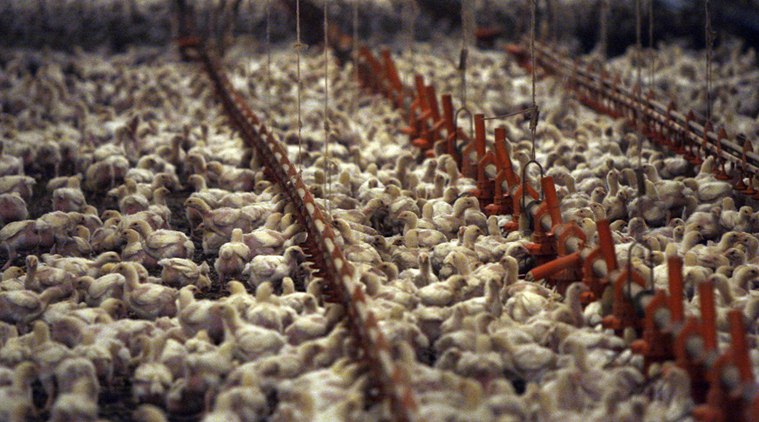
China launches probe into Brazilian broiler chicken imports

Image result for China launches probe into Brazilian broiler chicken imports

China on Friday launched an anti-dumping investigation into imports of Brazilian broiler chickens after a complaint from the domestic industry that the South American country has been selling its chicken below market value.

Brazil accounted for more than 50 percent of broiler product supplies to China, the world's No. 2 poultry consumer, between 2013 and 2016, according to a preliminary review, the Commerce Ministry said in a statement.

Any move to penalize imports, which are worth more than $1 billion a year, would be a major blow to Brazil's meat industry following a food safety scandal that threatened to tarnish the country's powerhouse protein industry.

ABPA, a group representing Brazilian chicken producers and exporters, denied they sell products below market prices, association president Francisco Turra told Reuters on Friday.

"We are very competitive and it is hard for the Chinese producer to understand," Turra said, reflecting on the surge of imports since the Chinese market opened to Brazilian poultry in 2009. "Such complaints are normal and we can defend ourselves."

Brazil faced similar claims from South Africa and Ukraine and won the cases, he said. Brazilian government officials did not immediately respond to requests for comment.

Shares of Brazil's BRF SA, the world's largest chicken exporter, fell 1 percent on Friday as the benchmark Bovespa stock index gained 0.2 percent.

A BRF representative declined to comment.

Brazil replaced the United States as the top chicken supplier after China slapped anti-dumping duties on U.S. broiler chicken products in 2010.

China is the biggest national consumer of Brazilian meat.

China relies on imports for its supply of white feather broiler chickens, which are favored by fast-food chains like KFC (YUM.N) and McDonalds (MCD.N) for their more rapid development and plumper meat. Yellow-feathered birds, which are native to China, are generally sold at retail.

The investigation comes just months after Beijing slapped hefty penalties on sugar imports from top growers such as Brazil and Thailand after lobbying by domestic mills.

In 2016, Brazil accounted for 85 percent of China's frozen chicken imports - almost 600,000 tonnes valued at as much as $1.23 billion, according to customs data.

The push by China's domestic industry for an anti-dumping probe came as poultry farmers and processors recover from the nation's worst outbreak of bird flu in years and struggle with falling demand.

"This is good news for the domestic chicken market," said a chicken farmer in northern China who gave his surname as Tan.

"The chicken market has been not so good since the second half of last year. Brazil is selling a lot to China at a cheap price while China has ample supplies itself."

In 2017, demand and output are expected to hit their lowest since 2006, according to U.S. government estimates. Domestic supplies are being hurt by low availability of grandparent breeder stock needed to produce more meat.

Worries about the deadly virus hurt demand for chicken meat and sent some regional prices to more than decade old lows in February.

Live broiler chicken prices in Shandong province, one of the nation's major producing areas, have since more than doubled, and were around 7.7 yuan ($1.15) on Friday, as the crisis passed and concerns about infection eased.

Import prices from Brazil have remained low in comparison, making it hard for the local industry to compete, analysts said.

Still, any curb on foreign supplies would likely boost domestic prices further, potentially denting demand for chicken as a cheap alternative to pork, the nation's favorite meat.

Broiler chicken sells for 14 yuan ($2.10) per kg, according to government data, almost one-third less than pork and more than 70 percent cheaper than beef and lamb.

Source: Reuters

--

Quer se tornar um influenciador digital?
Acesse hugocavalari.com, utilize o cupom jacksoncampos e tenha descontos exclusivos

sexta-feira, 18 de agosto de 2017

China launches probe into Brazilian broiler chicken imports

Image result for China launches probe into Brazilian broiler chicken imports

China on Friday launched an anti-dumping investigation into imports of Brazilian broiler chicken and products after a complaint from the domestic industry that the South American country has been selling its chicken below market value.

Brazil accounted for more than 50 pct of broiler product supplies to China, the world's No. 2 poultry consumer, between 2013 and 2016, a Commerce Ministry statement said on Friday, according to a preliminary review.

Any move to penalize imports worth more than $1 billion a year would be a major blow to Brazil's meat industry following a scandal over its beef exports earlier in the year, which threatened to tarnish the country's powerhouse protein industry.

Brazil replaced the United States as the top supplier of chicken after China slapped anti-dumping duties on U.S. broiler chicken products in 2010.

China is the biggest national consumer of Brazilian meat.

China relies on imports for its supply of white feather broiler chickens, which are favored by fast-food chains like KFC and McDonalds for their more rapid development and plumper meat, compared with yellow-feathered birds, which are native to China and generally sold retail.

The investigation comes just months after Beijing slapped hefty penalties on sugar imports from top growers such as Brazil and Thailand after lobbying by domestic mills.

In 2016, Brazil accounted for 85 percent of China's frozen chicken imports. which totaled almost 600,000 tonnes valued at as much as $1.23 billion, customs data shows.

The push by China's domestic industry for an anti-dumping probe comes as poultry farmers and processors recover from the nation's worst outbreak of bird flu in years.

Chicken is a cheap alternative to pork, the nation's favorite meat. The outbreak hurt demand for chicken meat as people worried about catching the deadly virus and sent prices <0#JCI-BROILER> to more-than-decade lows in February.

Live broiler chicken prices in Shandong province, one of the nation's major producing areas, have since more than doubled, and were around 7.7 yuan ($1.15) on Friday, as the crisis passed and worries about infection eased.

Import prices from Brazil have remained quite low in comparison, making it hard for the local industry to compete, analysts said.

Shan Xuewei, a broiler chicken trader based in Shandong, said he believed the probe was unnecessary.

"Brazilian chicken is indeed cheap ... and people of course will go for the cheaper stuff."

Source: Reuters

sexta-feira, 11 de agosto de 2017

China should not back US in case of war with North Korea, Global Times says

South Koreans watch a television displaying news broadcasts reporting on North Korea at a station in Seoul, South Korea, Aug. 10, 2017. EPA/JEON HEON-KYUN

China should stay neutral if North Korea initiates an armed conflict with the United States, but must prevent any attack by South Korea or the US, said Global Times, a mouthpiece of the Communist Party of China, Friday.

In its latest editorial, the Times acknowledged Beijing's failure to persuade Washington or Pyongyang to back down, but must respond firmly if its regional interests are jeopardized by a possible conflict.

Source: EFE

quarta-feira, 9 de agosto de 2017

Good, bad or ugly? China's commodity imports conundrum

Image result for china economy

Were China's commodity imports in July a continuation of the trend of robust growth, a pause from the recent strength, or early signs of a slowdown?

When numbers aren't unequivocally pointing in the same direction it often becomes possible to interpret them in different ways.

Take the following three quotes from respected analysts in the wake of Tuesday's July trade figures.

1. "China's imports of commodities for July came in better than expected, with the normal seasonal downturn seemingly delayed for another month."

2. "China's July commodity import numbers were a mixed bag as year-on-year growth in energy commodity imports remained strong while iron ore dipped and copper remained steady."

3. "China's commodity import volumes were generally weak in July. High stocks of many commodities and growing domestic production dampened demand for imports. What's more, the prospect of cooling domestic demand points to further weakness ahead."

There is nothing wrong with a diversity of views when it comes to analyzing the state of the market in the world's biggest buyer of commodities, but it doesn't help in offering a definitive picture.

The safest route is to acknowledge that July's data was somewhat mixed, but this by itself isn't enough to call an end to the positive story of China's commodity demand so far this year.

Crude oil provides a good example of the mixed view, with imports in July coming in at 8.18 million barrels per day (bpd).

This was the lowest since January and down from 8.79 million bpd in June, seemingly a bearish outcome.

But imports are also 12 percent above the level of July last year and the growth rate in the first seven months of the year is a strong 13.6 percent.

The short-term driver for the lower crude imports in July is likely to have been lower refinery production and a drawdown in commercial inventories, which had risen to the highest level in nine months at the end of June.

It appears that Chinese refiners, particularly the smaller, independent operators, took advantage of lower prices to stock up on crude in the second quarter of 2017.

This implies that growth in imports in year-on-year terms may moderate in coming months, but doesn't yet point to a reversal in the overall trend for rising imports.

For that to occur, China would have to scale back purchases for its strategic storage, refiners would have to curtail exports of refined products and domestic demand would have to weaken.

While these three scenarios are all possible, it's unlikely that they are the base case of the majority of analysts.

IRON ORE, COAL SLIP

Iron ore imports also took a breather from recent strength, coming in at 86.25 million tonnes in July, down 8.9 percent from June's strong 94.7 million and 2.4 percent below the 88.4 million from July last year.

However, in the first seven months of the year China imported 625 million tonnes or iron ore, up 7.5 percent from the same period in 2016.

That's by no means a weak outcome, but concerns are mounting that China has bought too much of the steel-making ingredient in recent months, given the rise in port stockpiles to near record levels and expectations that some heat will come out of the steel sector in the second half of the year.

By itself, the drop in July imports of iron ore isn't enough to call an end to the recent bullish trend, but a couple more months of soft outcomes will be cause for a re-assessment.

It's a similar story for coal, with imports dropping 9.9 percent to 19.46 million tonnes in July from June, and 8.3 percent from July last year.

But coal imports are still 18.2 percent higher in the January to July period, given higher demand for both thermal coal for power generation and coking coal for steel production.

However, as with iron ore, the outlook for coal for the rest of the year is becoming less certain, given some new regulations banning imports at smaller ports and a more thorough inspection process.

Overall, China's commodity imports in July do raise some question marks about the strength and sustainability of this year's growth rate, but not yet to the point where it's time to turn bearish.

Source: Reuters

sexta-feira, 4 de agosto de 2017

Global refiners brace themselves as China cements its oil market dominance

Image result for Global refiners brace themselves as China cements its oil market dominance
China is on pace to overtake the United States as the world's biggest oil importer this year, cementing its status as Asia's most pivotal oil market actor that will increasingly dominate the region's fuel trade.

For the first time, China imported more crude oil in the first half of the year than the U.S., government statistics showed. China averaged 8.55 million barrels per day (bpd) versus 8.12 million bpd in the U.S., a trend that is expected to last.

The shift highlights the change in the center of gravity in global oil markets from West to East. Chinese state-run oil trader Unipec is now the world's biggest physical oil trader. By drawing more of the world's oil to its shores, China, the second-biggest oil consumer after the U.S., will play a crucial role in setting the global price of the commodity, especially as the crude futures market in Shanghai develops.

China's import surge is being driven by the expansion of its refinery capacity. But, as the domestic demand has not materialized to soak up the fuel supply, China's exports of gasoline and diesel have climbed to record highs. This flood of products has caused headaches for competitors across Asia and depressed diesel profit margins to multi-year lows in 2016.

"China is putting a lot of pressure on the traditional export hubs of Taiwan, Korea and Singapore to capture the market share within Southeast Asia and Australia," said Joe Willis, senior research analyst, Asia refining, at energy consultancy Wood Mackenzie.

The trend of more refining capacity and higher exports is set to continue.

China plans to add at least 2.5 million bpd of refining capacity by 2020, according to a recent presentation from China Petroleum & Chemical Corp, or Sinopec. Sinopec is Asia's biggest oil refiner and the parent of Unipec.

This year, PetroChina Ltd will start a 260,000 bpd refinery in Yunnan in southern China while China National Offshore Oil Corp will start up a 200,000 bpd expansion at its existing Huizhou plant in Guangdong province. The start ups will add 350,000 bpd of new Chinese capacity in 2017 though both plants will not reach full capacity until 2018.

Exports of gasoline from China are expected to increase by at least 10,000 barrels per day this year from 2016, driving overseas gasoline sales to between 235,000 bpd and 240,000 bpd this year and about 330,000 bpd in 2018, estimates from consultants FGE and Wood Mackenzie showed.

Unipec is leading the way in targeting new overseas markets, moving jet fuel from Singapore to northwest Europe in June for the first time in several years. Meanwhile, Chinese diesel shipments in 2017 have more than doubled to France, more than quadrupled to Italy and the country shipped diesel to Kenya for the first time this year.

HIGH QUALITY FUEL

Export-oriented refiners in Singapore, South Korea and Taiwan will be most affected by the Chinese competition.

"We're trying to diversify and find new markets by increasing the number of our customers in existing countries," a South Korean refining source said, declining to be named as he was not authorized to speak with the media.

"It's affecting Korean refiners as we are having one more player in the market."

Japanese and Indian refiners will be less affected.

China and India have eclipsed Japan as Asia's biggest oil consumer. Japanese refiners are consolidating capacity because of a falling population and the increasing use of alternative fuels in the power and transportation sector has cut oil consumption.

Meanwhile, Indian refiners are focusing on meeting soaring domestic demand.

China's new modern refineries are competing with the region's exporters in producing fuels for countries with stringent fuel standards such as Australia. Diesel exports to Australia climbed seven-fold to 850,000 tonnes in 2016 and are on pace to nearly match that level this year.

A slowdown in Chinese domestic fuel demand as people use more electric vehicles or co-share bicycles and scooters has pushed refiners to export more gasoline.

China's gasoline demand is expected to slow to 3.5 to 4 percent in 2017 compared with last year's 6.5 percent growth, said Sri Paravaikkarasu, head of East of Suez oil at FGE.

Sales growth for automobiles, mainly powered by gasoline, has slowed to 0.7 percent in the first half of 2017, compared with 8.7 percent a year ago, while those powered by alternative fuels grew 52.9 percent, BMI Research said.

Source: Reuters

sexta-feira, 21 de julho de 2017

China says U.S. talks covered joint efforts on excess steel capacity

Image result for China says U.S. talks covered joint efforts on excess steel capacity
Seeking a more positive spin on U.S.-China economic talks viewed as ending in discord, China said on Thursday that the two sides agreed to "active and effective measures" to reduce global excess steel production capacity.

The statement issued a day after the talks by the Chinese embassy in Washington did not elaborate on the measures discussed by U.S. Commerce Secretary Wilbur Ross and Chinese Commerce Minister Zhong Shan on Wednesday.

"In this breakout session, the two sides focused their discussion on steel, aluminum and high-tech trade," the embassy said in a statement. "The two sides had in-depth discussion on cutting excess steel production capacity in the world and agreed to active and effective measures to jointly address this global issue."

A U.S. Commerce Department spokesman declined comment on the Chinese statement and referred Reuters to a joint statement from Ross and U.S. Treasury Secretary Steven Mnuchin. Their statement did not mention steel and cited only one point of consensus, a "shared objective" to work toward reducing the U.S. trade deficit with China.

Late on Wednesday, a Trump administration official told Reuters that China had refused to agree to U.S. demands that it eliminate excess steel capacity and take other steps to open its economy for foreign firms.

The first annual economic summit between the Trump administration and their Chinese counterparts ended with canceled news conferences, no joint statement and no new transaction announcements.

The Chinese embassy statement also said China agreed to "deepen its cooperation" with the United States on expanding trade in services. The two sides also will start work on a one-year economic cooperation plan, determining an "early harvest" as soon as possible.

Before the latest Chinese statement, U.S. Agriculture Secretary Sonny Perdue announced that China would allow imports of U.S. rice for the first time, agreeing to phytosanitary protocols.

Tougher Stances

The rocky dialogue session in Washington was a sharp contrast to U.S. President Donald Trump's rosy first meeting with Chinese President Xi Jinping at Trump's Mar-A-Lago, Florida estate in April.

Both sides found each other harder to deal with than expected, China trade experts said.

The Trump team's expectations that Beijing would agree to quick, substantial reforms to shrink the U.S. trade deficit and eliminate excess steelmaking capacity were dashed, while China found that further minor steps and vague action plans would no longer placate the U.S. side.

"There was a misalignment of expectations. The Americans pushed for deliverables, and the Chinese said no, everything is fine," said Scott Miller, an Asia trade expert at the Center for Strategic and Economic Studies in Washington. "These are difficult issues that don't lend themselves toward easy boxes to check."

Domestic politics contributed to both sides taking a tougher stance, said Eswar Prasad, a trade policy professor at Cornell University and former China division chief at the International Monetary Fund.

China faces a once-in-five-years Communist Party congress to set new leadership this autumn, while Trump is keen to hold to campaign promises to help ailing U.S. steel and coal industries and grow U.S. manufacturing jobs.

Prasad said that China found that the Trump administration is "no pushover" on trade and may need to offer bigger concessions to keep its relationship with its biggest trading partner on an even keel.

"The administration seems unwilling to settle for further symbolic, cosmetic victories in terms of access to China’s markets and is pressing for more specific and time-bound commitments from China about opening up its markets to U.S. exporters and investors," he added.

Source: Reuters

segunda-feira, 17 de julho de 2017

China's steel, aluminum output at record as U.S. mulls penalties

Image result for china steel factory

China churned out record amounts of steel and aluminum in June as producers rushed to cash-in on rallying prices in the wake of a drive by Beijing to crack down on output of low-grade metal.

That could fuel concerns the world's top steel producer will export more metal, stoking global oversupply and fanning tensions with the United States after it accused the nation of flooding international markets with cheap aluminum and steel.

U.S. President Donald Trump has threatened to use a Cold War-era law to restrict imports for national security reasons as bilateral talks between Washington and Beijing continue.

China has long-denied that it has been offloading metals abroad at the expense of foreign producers.

Chinese steel output last month rose 5.7 percent from the year before to a record 73.23 million tonnes, surpassing April's all-time high of 72.78 million tonnes, data from the National Statistics Bureau showed on Monday.

Aluminum production jumped 7.4 percent year-on-year to 2.93 million tonnes, exceeding December's record of 2.89 million tonnes.

Export data last week showed steel products shipments fell last month, while aluminum sales abroad were steady.

But analysts said the latest numbers should not be seen as provocative move ahead of a decision by the United States on possible import tariffs.

"It's wrong to think that this is some sort of unified, homogenous voice that is deliberately making some provocative statement to the U.S," said Paul Adkins, managing director of aluminum consultancy AZ China.

"That couldn't be further from the truth. What we're really seeing, if anything, is ... a lack of a coordinated response (from Chinese producers)."

Analysts said the increases came as local steel and aluminum prices rose after the government cut back on metals producing capacity earlier in the year as it battles a glut in supply and looks to clamp down on pollution.

"The reason that prices were higher in the first place was the expectation of Chinese cutting back supply of aluminum and steel, yet that is what is inducing its high utilization rates," said Mark Pervan, chief economist at AME Group in Sydney.

Steel rebar margins were almost 1,000 yuan ($147.77) per tonne in June, enticing mills to increase output, said Bai Jing, analyst at Galaxy Futures.

"China's crackdown on low-end steel has left a capacity gap in the market," she said.

In the first half of the year, China eliminated around 120 million tonnes of low-end steel capacity. By May, the country had fulfilled nearly 85 percent, or 42.4 million tonnes, of its 2016 steel capacity cutting target.

The data came as better-than-expected GDP numbers brightened demand prospects for metals and spurred gains in prices, with steel rebar rising 2 percent.

Source: Reuters

segunda-feira, 26 de junho de 2017

China's COFCO likely to sit out global grains race as it digests acquisitions


As the world trade in farm commodities faces a shake-up, one of the groups widely expected to play a leading role - China's COFCO - will probably have to sit out the industry consolidation after all.

Sources with knowledge of COFCO's expansion strategy say the state-run conglomerate is struggling to integrate businesses it bought three years ago, deals which made it a significant global agricultural trader but are now hindering its ability to swoop on rivals.

Illustrating the problems, the sources said that at times different arms of the agribusiness had tried to compete against each other in commodity deals. On top of this, several senior staff had recently left its trading operations while a heavy group debt burden presented another impediment to further mergers and acquisitions.

"For now, the focus is on reorganization and digesting the acquisitions," said a COFCO official, who declined to be identified. "Thoughts of further aggressive M&A or building assets are on the backburner for at least a couple of years," the official told Reuters.

Spokespeople for COFCO Group and its newly-formed COFCO International trading arm did not respond to requests for comment.

One of about 100 conglomerates controlled by China's central government, COFCO Group has interests that include hotels, real estate and some of China's leading food and drink brands including GreatWall wine.

It trades more than 78 million tonnes of grain a year, according to state media, and in 2014 agreed to buy Dutch grain trader Nidera and the agribusiness of Singapore-listed Noble Group for more than $3 billion.

The deals gave COFCO assets in some of the top grain, vegetable oil, sugar and coffee producing regions. They also allowed it to start challenging the "ABCD" quartet of agricultural commodity traders - Archer Daniels Midland (ADM), Bunge, Cargill [CARG.UL] and Louis Dreyfus Company [AKIRAU.UL] - which have long dominated the global business.

These firms were once highly profitable but in recent years record stocks of commodities such as corn, soybeans and wheat have sliced margins and dampened trading opportunities.

A first sign of sweeping change for the industry emerged last month when Swiss mining and commodities group Glencore Plc made an informal approach to Bunge to discuss "a possible consensual business combination".

While Bunge said it was not engaging in such talks, some kind of industry consolidation seems unavoidable and some people had said Glencore's move might spur COFCO into M&A action.

"For the past year I've expected that it would be COFCO that would go after Bunge. This may motivate them further," Jay O'Neil, an agricultural economist at Kansas State University, said last month.

Sources familiar with COFCO's thinking, however, also played down this possibility. "The company has suffered a lot because of the lengthy process of going toward one group," one of the sources said. "It will take some time to repair the damage of the last couple of years."

As COFCO Group is a state-owned enterprise, any acquisition would also need Chinese government approval, which could be a lengthy process.

COFCO INTERNATIONAL

COFCO unveiled its new division, COFCO International, on April 24, bringing together Nidera and its Swiss-based grain arm COFCO Agri under new chief executive Johnny Chi.

According to its website, the company aims to expand its business globally and "strengthen worldwide origination, logistics and trading capabilities" supported by COFCO's unique position in China.

The company has increased staff numbers in Geneva, home to COFCO International's headquarters and the center of its grains and oilseeds business. Its Rotterdam office separately plays a core role in trading activities.

Since the start of the year, COFCO has tried to replace two top officials at COFCO Agri, who sources said left due to disagreements over the direction of the group.

Company memos seen by Reuters showed that there has also been a string of departures in recent weeks, including head trader Wolfgang Stiehler, who had joined Nidera only in January this year to provide strategy also. Stiehler did not immediately respond to a Reuters request for comment.

Other officials who have left included traders, back office staff and local country managers, the memos showed.

A second source said Nidera and COFCO Agri had recently tried to compete for the same grain deal. While the duplication was eventually prevented, there were other similar instances and it was unclear whether those were stopped. "How is this supposed to happen if it's one company?" the source added.

"The transition into a merger is looking more difficult than people thought. The merger is complex and will not be quick," a third source said.

Two of the sources said separately that COFCO Agri was still buying grains from bigger rivals such as ADM, even though COFCO International was operational. This was due to the need to hedge deals, or to ensure they are completed promptly, one of the sources said.

DEBT AND CASH

Another obstacle to more acquisitions is COFCO's debt and cash position. Data from its results showed the group's total debt had risen to 51.88 billion yuan ($7.6 billion) in 2016 from 50.63 billion yuan the previous year.

Separately, the parent group's cash and cash equivalent position dropped to 1.28 billion yuan in 2016 from 4.13 billion yuan in the previous year. COFCO group's operating profit fell to 0.85 billion yuan in 2016 from 1.96 billion in 2015.

COFCO International's shareholders also include Singapore state investor Temasek, China-based private equity firm HOPU Investments, Standard Chartered and the World Bank's private sector investment arm IFC, according to regulatory statements.

Temasek, HOPU and Standard Chartered all declined to comment, while COFCO's investor relations department declined to provide details about the size of shareholdings in COFCO International. An IFC spokesman confirmed it had invested in the company but gave no details of the stake.

SOUTH AMERICAN GROWTH

Since first investing in Nidera, COFCO has reported several major problems, including a $150 million financial hole in its Latin American operations and $200 million in unauthorized trading losses on its biofuels desk in the region.

However, it has also made progress there. Data seen by Reuters showed COFCO, through Nidera's and Noble Agri's existing operations, has become the second biggest grain exporter from Argentina, behind Cargill.

In Brazil, data showed that COFCO had moved up to the no. 4 grain exporter slot in 2016, ahead of Louis Dreyfus.

"It's a new company with a lot of people coming from other firms," said Joseph Reiner, COFCO International's Brazil-based global head of coffee. "Growth has to be sustainable, considering resources and results," he told Reuters.

COFCO is already gaining prominence in the sugar market. Last month it sold the bulk of sugar - primarily sourced from Brazil - against the May ICE futures raw sugar contract. This was the second-largest delivery against the contract.

COFCO is estimated to rank as Brazil's no. 6 sugar player. Marcelo de Andrade, Sao Paulo-based president of global sugar at COFCO International, said the firm had looked at possible purchases of sugar mills in Brazil "but decided to abort any deals".

"At the moment we are not looking (at buying) any more and we are keen to fill as much as possible our current crushing capacity," he told Reuters.

Source: Reuters

sexta-feira, 23 de junho de 2017

China, India, Japan hamper Asia oil demand growth, efforts to balance market


As the global oil market frets about a stubborn supply glut, faltering demand growth in key Asian crude importers is further hampering efforts to restore market balance.

A fuel glut in China, a hangover from demonetization in India, and an ageing, declining population in Japan are holding back crude oil demand growth in three of the world's top four oil buyers.

The three countries make up a fifth of 97 million barrels per day (bpd) in global oil consumption, and any hiccups among them will mean lower-than-expected oil demand growth in Asia, helping to undercut the OPEC-led effort to support prices.

"We are indeed seeing lower demand from more than a few clients - air, marine, road, industrial ... They are actually consuming less fuel than anticipated," said Michael Corley, managing director of Mercatus Energy Advisors.

In China, vying with the United States as the world's biggest oil importer, imports in May were still at a near record of 9 million bpd, but a looming cut in refinery operations is set to hit demand for crude oil in the third quarter.

In India, which overtook Japan as the world's third-biggest oil importer last year, crude imports fell by more than 4 percent between April and May to around 4.2 million bpd C-INIMP, as after-effects of the country's recent demonetization program hit consumption.

For the first five months of the year, India's imports are about flat to the same period last year, following an annual rise of 7.4 percent last year.

In Japan, Asia's most advanced economy, oil demand has been in structural decline for years due to a declining, ageing population, and the rise of cars with better mileage or that use alternative fuels.

Japan in April imported around 3.5 million bpd C-JPIMPTOT, down from a peak of 5.9 million bpd hit in 2005.

Coupled with plentiful supplies, the stuttering demand in Asia has contributed to a 20 percent price fall for Brent crude oil LCOc1 to around $45 per barrel, in what is the biggest slump in a first half of a year since 1997.

FLOATING STORAGE

In the latest indicator of a supply overhang, traders said that five very large crude carriers (VLCCs) have been chartered in recent days to store unsold oil.

Each VLCC can hold around 2 million barrels of oil, and the five chartered for storage add to around 25 supertankers already sitting in southern Malaysian waters.

In a market condition known as contango, where spot crude oil prices are cheaper than those for future delivery, it is profitable to store oil for a later sales.

Currently, spot Brent is almost $1.50 a barrel cheaper than that for delivery in early 2018. <0#LCO:>

"If oil prices head lower, floating storage will get more traction," said Ashok Sharma, managing director of ship broker BRS Baxi in Singapore.

The cheap spot price comes despite the effort led by the Organization of the Petroleum Exporting Countries (OPEC) to cut production by 1.8 bpd that has been in place since January.

Doubts over OPEC's compliance with its own targets and soaring U.S. output have led to scepticism that markets will re-balance soon.

"The slide in oil prices continues ... as markets remain skeptical of OPEC's ability to balance supplies," ANZ bank said on Friday.

Source: Reuters

quarta-feira, 24 de maio de 2017

China says no one should bring chaos to Korean peninsula

FILE PHOTO: China's Foreign Minister Wang Yi attends a joint news conference with United Arab Emirates Minister of Foreign Affairs and International Cooperation Sheikh Abdullah bin Zayed (not pictured) at the Ministry of Foreign Affairs, in Beijing, China May 2, 2017. REUTERS/Jason Lee
China said on Wednesday no one had the right to bring chaos to the Korean peninsula, a day after it pushed for full implementation of U.N. sanctions against neighboring North Korea for its missile and nuclear tests and called for dialogue.

The United States has been trying to persuade China, North Korea's lone major ally, to do more to rein in Pyongyang, which has conducted dozens of missile launches and tested two nuclear bombs since the start of last year, in defiance of U.N. Security Council resolutions.

The North has proudly publicized its plans to develop a missile capable of striking the United States and has ignored calls to halt its weapons programs, even from China.

It says the program is necessary to counter U.S. aggression. Its last missile test was on Sunday.

"No matter which party it is, no one has the right to bring war and chaos upon the peninsula," Chinese Foreign Minister Wang Yi told reporters after meeting German Foreign Minister Sigmar Gabriel.

He said anyone who did that would bear "historical responsibility".

U.S. President Donald Trump has said "a major, major conflict" with North Korea is possible and that all options are on the table, but that he wants to resolve the crisis diplomatically.

China has been infuriated by the U.S. deployment of its Terminal High Altitude Area Defense (THAAD) system in South Korea, saying it is a threat to its own security and will do nothing to ease tensions with North Korea.

The United States and South Korea, which hosts 28,500 U.S. troops, have said the deployment is aimed purely at defending against the North Korean threat.

China fully implements its U.N. Security Council sanction commitments toward North Korea and will continue to play a constructive role in negotiations, Wang said.

Almost a month ago, Washington began discussions with China on strengthening U.N. sanctions. However, a week ago U.S. U.N. Ambassador Nikki Haley said Beijing had gone quiet.

Traditionally, the United States and China have negotiated new sanctions before involving the other 13 U.N. Security Council members.

The Security Council first imposed sanctions on Pyongyang in 2006 and ratcheted up the measures in response to five nuclear tests and two long-range missile launches. North Korea is threatening a sixth nuclear test.

Source: Reuters

sexta-feira, 19 de maio de 2017

China likely to boost refined zinc imports as concentrate shortfall bites

China is likely to step up imports of refined zinc from this month, industry sources said on Friday, as dwindling global supplies of concentrate hit local output of the metal, used to galvanize steel.

China's refined zinc output marked its lowest in more than two years in April as the impact from the closure of major mines in places such as Australia and Ireland stifled the concentrate supplies China relies on to churn out finished metal. <MTL/CHINA4>

The nation's 'war on pollution' has also curbed output as Beijing clamps down on mining and heavy industry in a drive to clear its skies.

That will likely push buyers of refined zinc to look overseas for supplies, boosting international prices that this week marked their weakest since November at a touch below $2,500 per tonne, after chalking up substantial gains last year.

"It is starting to bite," said analyst Daniel Hynes of ANZ in Sydney. "The tightness is pretty much upon us."

"We are looking for zinc to push back to $2,800 in the second half ... The zinc market is set to stay tight over the short to medium term. This certainly should provide a bit of a reality check for the bears."

Imports of refined zinc from China's bonded zones could be resold on the local market for a profit of as much as $45 this week, Reuters calculations show, near the strongest since January 2016, when the country shipped in around 60,000 tonnes of refined metal.

China brought in just 25,600 tonnes in March and total imports are down by two thirds this year.

Traders have already been turning to local exchange stocks. Shanghai Futures Exchange zinc stocks have halved since February to near 100,00 tonnes, the lowest since February 2015.

Meanwhile, China's 'war on pollution' is entering its fourth year as it looks to dilute the environmental damage caused by years of breakneck economic growth, likely hitting production of base metals.

"The Chinese government is going to put a lot of pressure (on metals producers) to reform from an environmental perspective," said the head of metals at a China commodity trade house.

"Definitely we are going to see companies with limited domestic availability of concentrate. We should see some opportunities for imports of refined metal," he said, declining to be identified as he was not authorized to speak with media.

Source: Reuters

segunda-feira, 8 de maio de 2017

Oil rout driven by China, inventories and funds

An employee fills a motorcycle tank as another motorcyclist waits to buy petrol at a gas station in Hefei, Anhui province March 23, 2012. REUTERS/Stringer
The plunge in crude oil markets this week to a six-month low was likely driven by worries about Chinese economic growth, persistently high inventories and fund positioning.

U.S. crude oil CLc1 slumped by 5.0 percent to a low of $45.29 a barrel on Thursday, the lowest since November, when the Organization of Petroleum Exporting Countries agreed to curb production by 1.8 million barrels per day for six months from Jan. 1.

However, Friday saw a 1.5 percent bounce helped by assurances by Saudi Arabia that Russia is ready to join OPEC in extending supply cuts to reduce a persistent glut.

"People often reverse-engineer an explanation. But, I think the velocity of the move this week stems from China and its liquidity tightening. That spooked the market across all commodities," said Michael Tran, director of global energy strategy at RBC Capital Markets. "It's a commodities story rather than oil-specific."

Chinese manufacturing surveys this week triggered worries that the economic growth in the world's second largest economy may have peaked in the first quarter and China's central bank has moved to tighten credit leading to a fall in stock prices for the fourth straight week.Doubts that the OPEC-led supply cut of the past few months are deep enough to draw down bloated storage levels around the world are also weighing on prices. U.S. crude stockpiles fell less than expected last week as rising U.S. production offset reduced supply from OPEC.

As a result, oil traders may have finally given up on an early rebalancing of inventories in the crude market by OPEC.

FUNDS A FACTOR

One dominant group appeared to rush into the selling: managed futures firms, or Commodity Trading Advisors (CTAs), which manage about $340 billion in assets, according to BarclayHedge, a fund research group in Fairfield, Iowa.

These funds advise others on buying or selling futures, futures options, and foreign-exchange forward contracts. They often look at macro-economic trends across asset classes and trade dozens of markets using models to detect the start and end of moves.

For such firms, multiple signs of a trend change were clear this week: a nose-dive in Chinese iron ore futures DCIOcv1, big losses in gold and copper prices, and persistently high oil inventories that spooked crude oil traders.

Those fears appeared to be heightened by a note from J.P. Morgan analysts Thursday, citing increasing risk that Saudi Arabia would reverse its cuts and pump more crude. J.P. Morgan did not respond to requests for comment.

Even though oil prices have weakened since mid-March, speculators have maintained long positions, putting them in danger of a reversal like Thursday's sell-off.

"There are definitely some new shorts in the crude oil market. The systematic CTAs, the ones not trading fundamentals and purely technical, were definitely sellers," Nick Gentile, managing partner of commodity trading advisor NickJen Capital in New York, said.

As prices continued to fall, liquidation of timespreads added to the move, according to a note from Goldman Sachs.

Hedge funds are also losing faith that OPEC can accelerate the rebalancing of the oil market even if the group agrees to extend output cuts when it meets later this month.

The speed and direction of the selling this week was enough to cause the December 2017 crude contract price to fall below the December 2018 contract CLZ7-Z8, an indication of increasing worries about the overhang of supply.

Volumes spiked Thursday, with more than 940,000 front-month U.S. crude contracts changing hands, compared to the daily average of 535,000 contracts.

"The obvious thing is that the market was massively long. When it's a crowded trade, things tend to do the opposite very quickly," said Gentile.

Source: Reuters

quarta-feira, 3 de maio de 2017

North Korean media issues rare criticism of China over nuclear warnings

A man walks the the street decorated with flags as North Korea prepares to mark Saturday's 105th anniversary of the birth of Kim Il-sung, North Korea's founding father and grandfather of the current ruler, in central Pyongyang, North Korea April 12, 2017.    REUTERS/Damir Sagolj
North Korea's state media published a rare criticism of China on Wednesday, saying Chinese state media commentaries calling for tougher sanctions over Pyongyang's nuclear program were undermining relations with Beijing and worsening tensions.

A commentary carried by the official Korean Central News Agency (KCNA) referred to recent commentaries in China's People's Daily and Global Times newspapers, which it said were "widely known as media speaking for the official stand of the Chinese party and government."

"A string of absurd and reckless remarks are now heard from China every day only to render the present bad situation tenser," it said.

"China had better ponder over the grave consequences to be entailed by its reckless act of chopping down the pillar of the DPRK-China relations," the commentary said, referring to North Korea by the acronym for its official name, the Democratic People's Republic of Korea.

China is North Korea's neighbor and only major ally and the United States has pressed it to use its influence to rein in North Korea's nuclear and missile programs. Diplomats say Washington and Beijing are negotiating a possible stronger U.N. Security Council response - such as new sanctions - to North Korea's repeated ballistic missile launches.

The KCNA commentary charged that the Chinese articles had attempted to shift the blame to Pyongyang for "deteriorated relations" between China and North Korea and U.S. deployment of strategic assets to the region.

It also accused China of "hyping up" damage caused by North Korean nuclear tests to China's three northeastern provinces.

Chinese state media calls for North Korea to dismantle its nuclear program were "a wanton violation of the independent and legitimate rights, dignity and supreme interests" of North Korea and constituted "an undisguised threat to an honest-minded neighboring country which has a long history and tradition of friendship," it said.

The KCNA commentary said calls by "some ignorant politicians and media persons" in China for stricter sanctions on North Korea and not ruling out military intervention if it refused to abandon its nuclear program, were "based on big-power chauvinism."

It said North Korea's nuclear program was needed for the "existence and development" of the country and "can never be changed nor shaken."

"The DPRK will never beg for the maintenance of friendship with China," the commentary said.

Earlier on Wednesday, China called on all parties in the Korean standoff to stay calm and "stop irritating each other" a day after North Korea said the United States was pushing the region to the brink of nuclear war.

Source: Reuters

sexta-feira, 28 de abril de 2017

China warns situation with North Korea at 'critical point'


China warned on Friday that the situation with North Korea over its nuclear and ballistic missile programs is at a "critical point" and said dialogue and negotiations are the only "practical" way to end tensions.

Speaking at the United Nations before a Security Council meeting on North Korea - to be chaired by U.S. Secretary of State Rex Tillerson - China's Foreign Minister Wang Yi pledged that Beijing would fully implement all U.N. sanctions on North Korea.

"Due to the recent efforts by the DPRK (North Korea) to accelerate missile and nuclear development, China agrees to the international community to step up efforts of non-proliferation," Wang told reporters.

"A peaceful settlement of the nuclear issue on the Korean Peninsula through dialogue and negotiations represents the only right choice that is practical and viable," he said.

Tillerson, in his first visit to the United Nations as secretary of state, will press the 15-member Security Council to further isolate North Korea by swiftly imposing stronger sanctions in the event of further provocations by Pyongyang, including a long-range missile launch or sixth nuclear test.

The ministerial meeting comes after U.S. President Donald Trump told Reuters on Thursday that a "major, major conflict" with North Korea was possible over its nuclear and ballistic missile programs.

The United States, which is president of the Security Council for April, urged members - in a note outlining Friday's meeting - to "show their resolve to respond to further provocations with significant new measures."

Diplomats say further provocations are considered a nuclear test or long-range missile launch.

The Trump administration is focusing its North Korea strategy on tougher economic sanctions, possibly including an oil embargo, a global ban on its airline, intercepting cargo ships and punishing Chinese banks doing business with Pyongyang, U.S. officials told Reuters earlier this month.

The United States has been urging China to use its status as North Korea's only major ally to help rein in Pyongyang.

Washington is also stepping up pressure that began under the Obama administration against Cambodia, Laos and Malaysia, which have diplomatic and financial links to Pyongyang, to downgrade or cut diplomatic ties with North Korea.

TALKS SEQUENCE

U.N. Secretary-General Antonio Guterres is due to brief the Security Council at Friday's meeting, which will include foreign ministers from China, Britain and Japan. Tillerson met with his South Korean and Japanese counterparts before the council meeting and will meet Wang afterwards.

China has long promoted dialogue to resolve the "Korean nuclear issue," and the United States says it is open to talks, but the two countries disagree over the sequence.

"The U.S. require (North Korea) to take some actual action to curtail their nuclear program, which could then be followed by talks, and the Chinese position is talks first, action later," said a senior U.N. diplomat, speaking on condition of anonymity.

Since 2006, North Korea has been subject to U.N. sanctions aimed at impeding the development of its nuclear and missile programs. The council has strengthened sanctions following each of North Korea's five nuclear tests.

Traditionally the United States and China have negotiated new sanctions before involving remaining council members. It took the council three months to act after the last nuclear test, in September, and diplomats said Washington appears to be laying the groundwork with China for faster negotiations next time.

Source: Reuters

quarta-feira, 26 de abril de 2017

Haunted by 2016, China's utilities ready for coal buying spree

China's utilities are readying for a months-long buying spree to shore up thermal coal reserves ahead of the hotter summer months, sources say, in a strategy aimed at averting a supply crunch but which may drive prices higher.

Top power generating companies will need to purchase more than 40 million tonnes of thermal coal by the end of June to provide a cushion of supply during the third quarter, the second-highest demand period of the year after winter, according to internal government calculations provided by a source briefed on the matter.

That is 14 percent of China's quarterly output, or 15 days of use. The estimate is based on stocks of 90 million tonnes at the nation's thousands of utilities and a target to reach at least 130 million tonnes by June, the source said. That target is equivalent to almost half of the utilities July to September consumption.

The plan is to avoid a repeat of last winter's chaos when government mining cuts tightened domestic supplies, triggering a rally in prices in the world's top coal consumer and forcing Beijing to take emergency steps to boost supplies to avert an energy crisis.

"China could have a bigger coal crisis than last year," said an Inner Mongolia-based purchasing manager with China Resources Power Group on Wednesday.

Utilities including China Datang Corp [SASADT.UL] and China Guodian Corp [CNGUO.UL] typically replenish stocks after the winter, but this year they will need to load up more than usual because stocks are at multi-year lows, two analysts and two utility sources said.

The stockpiling demand could spur higher thermal coal futures prices. Futures have already rallied 26 percent this year and hit a record 566.20 yuan ($82.17) per tonne earlier this month.

Prices are surging as China's government clamped down on illegal mining and required miners to shut production as way to combat pollution and overcapacity.

The National Development and Reform Commission (NDRC), China's economic planner, did not respond on Wednesday.

A hotter-than-average summer would have a blistering impact on coal-fired power generation demand. Long-range weather forecasts show temperatures in China's two biggest cities Beijing and Shanghai will be slightly higher than average in July to September.

Another challenge for the power market is recent low rainfall amounts, which last month crimped hydropower output, China's second-largest power source behind coal.

"The first quarter was particularly dry compared with 2016, so coal generation went up quite aggressively. Power demand will remain strong and coal will see more upsides when hydropower falters," said Frank Yu, Principal Consultant, APAC Power & Renewables, for Wood Mackenzie.

Coal inventories at major utilities stand at 50 million tonnes, their lowest in April since at least 2014 when they were 72 million tonnes, according to a survey by consultancy Fenwei.

Utilities consumed 300 million tonnes of coal in the July to September period last year, Fenwei said.

The Inner Mongolia buyer said he has 60,000 tonnes of coal, or about ten days of use, which is "very low".

He will need to increase stocks to almost 100,000 tonnes, or 15 days of use, by the end of June to see him through the summer months.

Illustrating rising concerns about coal prices in Beijing, the NDRC has issued two statements this week saying it will take steps to get prices to return to "reasonable" levels before the summer months.

Source: Reuters

segunda-feira, 24 de abril de 2017

China clamps down on excess steel as Japan decries Trump 'protectionism'

An employee walks past columns of steel as she works at a steel production factory in Wuhan, Hubei province, August 2, 2012.  REUTERS/Stringer/File Photo
Twenty-nine Chinese steel firms have had their licenses revoked as Beijing kept up its campaign to tackle overcapacity in the sector and days after U.S. President Donald Trump said he would open a probe into cheap steel exports from China and elsewhere.

Analysts say the revocations were unlikely to be a direct response to Trump's plan, but rather a part of China's reform measures aimed at reducing surplus steel capacity that many estimate at around 300 million tonnes, about three times Japan's annual output.

The official China Daily said Washington's move to investigate steel imports could trigger a trade dispute between the United States and its trading partners. In Japan, the world's second-biggest steel producer after China, the head of its steelmakers' group expressed concern over Trump's protectionist policy.

"We are greatly concerned over Trump's protectionism, although we hear he has softened his tone on some issues with a grasp of reality," Japan Iron and Steel Federation chairman Kosei Shindo told a news conference on Monday.

China's Ministry of Industry and Information Technology released a list on Monday of 29 firms that will be removed from its official register of steel enterprises. Most have already stopped producing steel, but some had illegally expanded production or violated state closure orders.

"It's all enveloped in this strategy to improve the financial condition of the industry which has been weighed down by excess capacity for some time, partly as a result of inefficient operations," said Daniel Hynes, commodity strategist at ANZ.

China is aiming to shed between 100 million to 150 million tonnes of excess capacity over the 2016-2020 period. It also plans to shut around 100 million tonnes of low-grade steel production by the end of June.

On Monday, another 40 steel firms have been asked to make changes in areas such as environmental protection and safety.

The majority of the companies were accused of failing to comply with emergency output restrictions during heavy pollution periods, and they must fully "rectify" their violations within a prescribed period, the industry ministry said, without giving a specific time frame.

Hynes said China may take a more gradual approach in shutting inefficient mills rather than force "a lot of closures at once" and cause a spike in steel prices, which is what happened in the third quarter last year.

China set up an official steel firm register in 2009 to impose order on the poorly regulated industry and to help companies during price negotiations with iron ore suppliers overseas.

The register was also supposed to identify the mergers and closures required to meet a target to put 60 percent of China's steel capacity in the hands of its 10 biggest producers by the end of 2015.

However, industry consolidation rates actually fell to 34.2 percent over the 2011-2015 period, from 48.6 percent in the previous five-year period, and China has now pushed back the 60 percent target until 2025.

According to figures published by the official China Metallurgical News earlier this month, 292 out of a total of 635 firms in 12 provinces and cities have already ceased production or shut down completely.

Source: Reuters

segunda-feira, 17 de abril de 2017

Steel, stimulus drive China's strongest economic growth since 2015


China's economy grew faster than expected in the first quarter as higher government infrastructure spending and a gravity-defying property boom helped boost industrial output by the most in over two years.

Growth of 6.9 percent was the fastest in six quarters, with forecast-beating March investment, retail sales and exports all suggesting the economy may carry solid momentum into spring.

But most analysts say the first quarter may be as good as it gets for China, and worry Beijing is still relying too heavily on stimulus and "old economy" growth drivers, primarily the steel industry and a property market that is overheating.

"The Chinese government has a tendency to rely on infrastructure development to sustain growth in the long term," economists at ANZ said in a note.

"The question is whether this investment-led model is sustainable as the authorities have trouble taming credit. We need to watch closely whether China’s top leadership will send a stronger signal to tighten monetary policy shortly."

Even as top officials vowed to crack down on debt risks, China's total social financing, a broad measure of credit and liquidity in the economy, reached a record 6.93 trillion yuan ($1 trillion) in the quarter -- roughly equivalent to the size of Mexico's economy.

Spending by the central and local governments rose 21 percent from a year earlier.

That helped goose the pace of growth in the first quarter well above the government's 2017 target of around 6.5 percent, and pipped economists' forecasts of 6.8 percent year-on-year.

Such a strong bolt from the gate could see Beijing once again meet its annual growth target, even if activity starts to fade later in the year, as many analysts widely expect.

"Main indicators were better than expected...which laid a good foundation for achieving the full-year growth goals," statistics spokesman Mao Shengyong said at a news conference.

SAME OLD GROWTH DRIVERS?

Once again, China's policymakers leaned on infrastructure and real estate investment to drive expansion. Growth in both areas has accelerated from last year and helped offset slightly weaker growth in the services sector.

"Faster growth in industrial output is the primary factor in the first quarter surprise, and due mostly to higher value-added growth related to supply-side consolidation in heavy industry," said Brian Jackson, China economist at IHS Global Insight.

Fixed asset investment rose 9.2 percent on-year, trouncing estimates, but IHS believes the growth was due entirely to faster spending in industry and construction.

Real estate investment remained robust, expanding 9.1 percent, while new construction quickened despite intensifying government measures to cool soaring home prices.

Most analysts agree the heated property market poses the single biggest risk to China's growth, but predict the cumulative weight of property curbs will eventually temper activity, not produce an outright crash.

"Sales (growth) has started falling, which means tightening measures are starting to take effect," said Shen Jianguang, an analyst at Mizuho Securities in Hong Kong.

More than two dozen cities announced property cooling measures in recent weeks, after curbs late last year appeared to have little lasting effect.

The construction boom has helped fuel the best profits for China's industrial firms in years, giving them more cash flow to pay down debt or invest in more efficient plants.

Buoyed by a near 12 percent increase in housing starts, China produced a record amount of steel in March, Reuters data showed. But analysts say warning signs are flashing.

Rising inventories and recent falls in steel prices suggest output is growing faster than China's demand, raising worries of a glut later in the year, which could heighten trade tensions with the U.S. and other major trading partners.

INCOME GROWTH PICKS UP

There were also positive signs on the consumer front.

After slowing for five quarters, disposable income growth picked up to 7.0 percent, the fastest since late 2015.

Retail sales rebounded 10.9 percent on-year as consumers shelled out more for appliances and furniture for new homes.

Auto sales also showed signs of recovering after weakening early in the year after the government reduced subsidies.

Analysts are closely watching for signs that consumption is accounting for a greater share of China's economy, which would

make growth more broad based but also reduce the need for more debt-fueled stimulus and reliance on "smokestack" industries.

Another bright spot was a further rebound in private investment, which had cooled in recent years, leaving the government to bear more of the burden of supporting the economy.

Private investment growth accelerated to 7.7 percent.

FOCUS ON STABILITY, THEN REFORMS

Though policymakers have pledged repeatedly to push reforms to head off financial risks, the government is keen to keep the economy on an even keel ahead of a major leadership transition later this year.

China's central bank has gingerly shifted to a tightening policy bias in recent months, and is using more targeted measures to contain risks after years of ultra-loose settings.

It has nudged up short-term interest rates several times already this year and further modest increases are expected, especially if U.S. rates continue to rise, which could risk a resurgence in capital outflows from China.

"I think China should be directing the economy to slow down its growth in the long term...but on the contrary, growth is accelerating," said Hidenobu Tokuda, senior economist at Mizuho Research Institute in Tokyo.

"This is good for now but it makes it difficult to see how China's economic slowdown will land in the future. Uncertainties remain high."

Source: Reuters

sexta-feira, 31 de março de 2017

Ports in China have enough iron ore to build 13,000 Eiffel Towers

A truck drives past piles of iron ore at the dump site of a port in Rizhao, Shandong province October 3, 2013. REUTERS/China Daily
With enough iron ore to construct Paris's Eiffel Tower nearly 13,000 times over, China's ports are bursting with stockpiles of the raw material and some of them are demolishing old buildings to create more storage space, trading sources said.

China's domestic iron ore production jumped 15.3 percent in January-February as a price rally last year extended into 2017, causing imported ore to pile up at the ports of the world's top buyer. Stockpiles are at their highest in more than a decade and are affecting prices.

Inventory of imported iron ore at 46 Chinese ports reached 132.45 million tonnes on March 24, SteelHome consultancy said, the highest since it began tracking the data in 2004. A third of the stocks belongs to traders and the rest is owned by China's steel mills, SteelHome said.

That volume would make about 95 million tonnes of steel, enough to build 12,960 replicas of the 324-metre (1,063-foot) high Eiffel Tower in Paris.

Global iron ore prices are now at just above $80 a tonne from a 30-month peak of $94.86 reached in February, largely due to the growing port inventory.

Prices surged 81 percent last year, bringing relief to miners after a three-year rout. The rally stretched into 2017, inspiring marginal producers to resume business and lifting supply as China's steel demand waned.

Further falls in the price of iron ore risk shuttering Chinese capacity again. That could boost China's reliance on top-grade exporters Vale, Rio Tinto and BHP Billiton.

Some ports, trying to manage their storage space, have in recent weeks rejected vessels carrying lower grade iron ore that is less preferred than higher quality material and could take months to clear, said a source at a foreign trading firm that has millions of tonnes of the steelmaking ingredient at Chinese ports.

"We have sent our people around the major ports in China and some are trying to find extra space. They're demolishing some abandoned buildings to create more space," said the source, who declined to be named because he is not permitted to discuss the matter publicly.

If iron ore stocks continue rising "we're going to reach maximum physical capacity at all ports in China by early June, said the source. "We saw some ports rejecting low-grade shipments which are very difficult to liquidate."

- For graphic on 'China's bulging iron ore stockpiles' click: tinyurl.com/mngq5ul

"TOO MUCH STOCK"

Including another 40 million tonnes of iron ore at China's steel mills "that's too much of stock," said Li Xinchuang, vice chairman at China Iron and Steel Association.

"It will be very dangerous for the price. That's what's very worrying about it," Li told Reuters at an industry conference on Thursday. Li said most of the stocks in ports were high quality iron ore despite perceptions in the market that the bulk of it was low-grade.

But officials at key Chinese ports for iron ore imports - Rizhao, Tangshan and Caofeidian - said they have enough storage capacity to take in more cargoes and that they were not turning away any shipments.

An official at Jingtang port in Tangshan said there are 15 million tonnes of iron ore stocked there currently, not far from its capacity of 20 million tonnes. The port in Qingdao, also a major destination for iron ore shipments, did not respond to a request for comment.

Australian miner Fortescue Metals Group, the world's No. 4 iron ore supplier which ships lower grade material mainly to China, said its deliveries to the country are "continuing as normal."

"While port stocks overall are at relatively high levels, Fortescue's share of those stocks aligns with our market share of imported ore into China," Fortescue CEO Nev Power said by email in response to a Reuters query.

Chinese ports can refuse discharge of some shipments and it's up to the importer to find another port but costs due to delays would be borne by the importer, said a shipping manager for a Chinese trading firm.

Still, slow demand could swell port stocks further as more shipments tied to Chinese mills' long-term contracts with miners arrive and traders scour the market for clients.

"We have a fleet of vessels on their way to China with no buyers. We're trying to find buyers," said the foreign trading source.

Source: Reuters

China urges Trump to ease controls on high-tech exports

(FILE) A combo picture made available on 10 February 2017 shows (L) US President Donald J. Trump during Attorney General Jeff Sessions' swearing-in ceremony at the White House in Washington, DC, USA, 09 February 2017, and (R) Chinese President Xi Jinping after signing a bilateral treaty with Czech President Milos Zeman (not pictured) at Prague Castle in Prague, Czech Republic, 29 March 2016. EPA/JIM LO SCALZO/FILIP SINGER
China urged the president of the United States on Friday to ease controls on the export of high-tech goods to China to stem the trade deficit he has repeatedly complained about.

"If the US can relax its control on high-tech exports to China and also create a level playing field... for Chinese investment in the US, that will also be helpful in addressing the trading imbalance between two countries," Vice Foreign Minister Zheng Zeguang said, following Donald Trump's latest criticism of Beijing.

Source: EFE

segunda-feira, 27 de março de 2017

Brazil sees Russian, Chinese, Spanish interest in north-south rail

Brazil's planned auction of the rights to expand and operate the North-South railway between Tocantins and Sao Paulo states has drawn the interest of major operators from countries including Russia, China and Spain, a government official said on Friday.

Adalberto Santos Vasconcelos, the special secretary running President Michel Temer's infrastructure investment program, told Reuters in an interview that interest was strong in the auction, which is scheduled for the second half of this year.

He also said the government may grant the winner of a concession for the Ferrogrão railway project in northern Brazil exclusive rights to operate along those rails to compensate for roughly 12 billion reais ($4 billion) in needed investments.

The upcoming rail auctions are part of the government's efforts to raise 45 billion reais in private investment for infrastructure projects to boost a recovery from Brazil's worst recession in over a century.

Source: Reuters