Mostrando postagens com marcador smartphones. Mostrar todas as postagens

quarta-feira, 5 de outubro de 2016

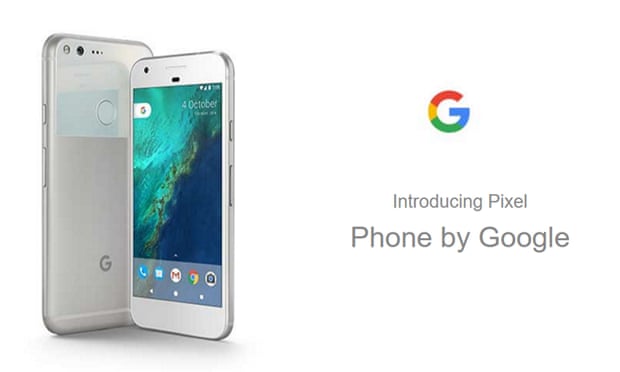
Pixel smartphone leads Google charge into hardware

Image result for pixel phone by google
Tech giant Google on Tuesday at a San Francisco news conference presented a new family of its products, featuring the new Pixel smartphone and the launching of the Daydream View virtual reality headset.

Pixel was, without a doubt, the star product at the event.

Source: EFE

segunda-feira, 26 de setembro de 2016

Snapchat to offer camera-equipped sunglasses in first hardware push

A billboard displays the logo of Snapchat above Times Square in New York March 12, 2015. REUTERS/Lucas Jackson
Snap Inc, the newly renamed parent company of messaging app Snapchat, plans to start selling camera-equipped sunglasses starting this fall, Chief Executive Evan Spiegel told the Wall Street Journal in an interview.

The sunglasses, dubbed Spectacles, will be sold via limited distribution for about $130, said Spiegel, who described the device as a toy.

The first hardware to be sold by Snap, the sunglasses will record video from the user's perspective in 10-second increments that can be synched with his or her smart-phone.

Source: Reuters

sexta-feira, 8 de julho de 2016

Malware hits millions of Android phones

Android sculpture
The software is also surreptitiously installing apps and spying on the browsing habits of victims.

The malware is currently making about $300,000 (£232,000) a month for its creators, suggests research.

The majority of phones that have been compromised by the malicious software are in China.

Remote control

A spike in the number of phones infected by the malware was noticed separately by security companies Checkpoint and Lookout. The malware family is called Shedun by Lookout but Hummingbad by Checkpoint

In a blogpost, Checkpoint said it had obtained access to the command-and-control servers that oversee infected phones which revealed that Hummingbad was now on about 10 million devices. China, India, the Philippines and Indonesia top the list of nations with most phones infected by the software.

Hummingbad is a type of malware known as a rootkit that inserts itself deep inside a phone's operating system to help it avoid detection and to give its controllers total control over the handset.

The ability to control phones remotely has been used to click on ads to make them seem more popular than they actually are. The access has also been used to install fake versions of popular apps or spread programs the gang has been paid to promote.

"It can remain persistent even if the user performs a factory reset," wrote Kristy Edwards from Lookout in a blogpost. "It uses its root privileges to install additional apps on to the device, further increasing ad revenue for the authors and defeating uninstall attempts."

Ms Edwards said the recent spike in infections could be driven by the gang behind the malware adding more functions or using their access to phones for different purposes.

The malware gets installed on handsets by exploiting loopholes in older versions of the Android operating system known as KitKat and JellyBean. The latest version of Android is known as Marshmallow.

In a statement, Google said: ""We've long been aware of this evolving family of malware and we're constantly improving our systems that detect it. We actively block installations of infected apps to keep users and their information safe."

Google released the latest security update for Android this month and it tackled more than 108 separate vulnerabilities in the operating system. So far this year, security updates for Android have closed more than 270 bugs.

Source: BBC

sábado, 4 de junho de 2016

Smartphone vai se tornar carteira digital, diz Febraban

Samsung Pay
O seu smartphone já faz quase tudo hoje em dia, mas a Febraban (Federação Brasileira dos Bancos) ainda acredita que ele poderá se tornar a sua carteira digital em breve.

De acordo com Gustavo Fosse, diretor setorial de tecnologia e automação bancária da Febraban, os aparelhos poderão ser usados para pagamentos em lojas físicas, tomando o lugar do cartão de crédito de plástico, e até mesmo para debitar crédito em catracas de transporte público (ônibus, metrô ou trem).

O primeiro cenário já está próximo, com o lançamento anunciado do Samsung Pay, a carteira virtual da Samsung, que deve acontecer nos próximos meses. A Apple também tem um serviço similar, mas que ainda está em fase de negociação no Brasil e não há previsão oficial de estreia.

Fosse, entretanto, lembra que nada impede que os próprios bancos lancem suas próprias carteiras digitais no futuro. O pagamento poderia ser realizado por uma tecnologia chamada NFC, presente em smartphones topo de linha e em alguns intermediários avançados. Ela promove uma comunicação segura com o terminal de pagamentos da loja física, dispensando o uso do cartão de plástico.

O uso do smartphone para realizar pagamentos em transporte público ainda não tem previsão de acontecer, pois é algo que depende de parcerias com prefeituras. Em São Paulo, a inovação mais recente neste campo é a possibilidade de recarregar o Bilhete Único dentro do ônibus (334 veículos permitem a ação, mas ainda estão em fase de testes).

A visão da Febraban sobre o futuro do uso dos smartphones tem base em dados de uso, coletados pela Deloitte para o relatório chamado Pesquisa Febraban de Tecnologia Bancária 2015.

No ano passado, o crescimento de uso de mobile banking foi de 138% em relação ao ano de 2014. Ou seja, os brasileiros fizeram 11,2 bilhões de transações bancárias pelo celular, enquanto, no passado, eram 4,7 bilhões.

Paschoal Baptista, sócio da Deloitte e especialista na indústria de serviços financeiros, vê o crescimento relacionado com o aumento de smartphones. “É algo natural e o brasileiro está menos receoso de realizar operações pelo celular”, afirmou Baptista.

Para garantir a segurança e a oferta de um bom serviço mobile, os bancos gastam muito com tecnologia. No ano passado, os investimentos e as despesas nesse setor somaram 19,2 bilhões de reais, sendo que 44% em software, 35% em hardware, e 20% em telecomunicações.

Os principais bancos do país contam com aplicativos que já são diferentes das versões para navegadores, indica Baptista. Isso estimula o uso pelo celular.

Na visão dos porta-vozes, alguns dos recursos mais atraentes são a possibilidade de pagar contas usando a câmera para a leitura de códigos de barras e de gerenciar as finanças a qualquer momento do dia.

Com essa cultura disseminada, a adoção do smartphone como carteira digital deve ser algo que acontecerá em breve.

Fonte: Exame

quarta-feira, 11 de maio de 2016

Usar celular não dá câncer, diz estudo feito por 30 anos

Vício em celular
"O Homem do Saco vai te pegar", "você pode acordar em uma banheira de gelo sem rim" e "usar celular causa câncer cerebral" estão todas no hall de frases em que você não acredita piamente, mas que, bem no fundo, dão um medinho.

Agora pelo menos da última delas você pode desencanar. Um grupo de pesquisadores australianos está cravando: o smartphone não vai danificar sua cabeça.

E a afirmação não é feita ao acaso. Foram 30 anos de pesquisa para poder chegar um resultado que eles consideram seguro.

O grupo de cientistas da Universidade de Sidney cruzou dados sobre a incidência de câncer cerebral registrada pelo governo local entre os anos de 1982 e 2013, com o número de usuários de telefones celulares desde 1987 (quando os telefones móveis chegaram à Austrália).

Foram quase 20 mil homens e mais de 14 mil mulheres analisadas, todos apontando que, não, a saúde deles não sofreu interferência da telefonia.

De acordo com o estudo, o registro de casos de câncer cerebral até chegou a aumentar nesse período - os homens tiveram 0,05% a mais de diagnósticos em 2013 do que no começo da pesquisa, as mulheres, por outro lado, se mantiveram estáveis.

Mas, ao comparar com dados ainda mais antigos, da década de 1970, os envolvidos perceberam que esse aumento começou a ocorrer justamente em 1982 - cinco anos antes do primeiro celular chegar à Austrália.

De acordo com os pesquisadores, o aumento, na verdade, se deu à um melhor diagnóstico da doença.

Foi justamente no começo dos anos 1980 que equipamentos tomográficos de melhor qualidade começaram a desembarcar na Oceania.

O estudo ainda calculou quantos casos da doença a população australiana teria se os aparelhos interferissem em algo.

Mesmo as previsões mais conservadoras acabaram frustradas (principalmente quando se pensa que o mesmo estudo apontou que 94% possuíam um celular).

"O número de casos esperados em 2012 era de 1.866, enquanto o montante registrado foi de 1.435 pacientes", afirmou Simon Chapman, professor de Saúde Pública da universidade e responsável pelo estudo.

Se você ainda não se convenceu, e acha que os casos ainda vão aparecer nos próximos anos, Simon insiste.

Os diagnósticos de câncer não aparecem em picos. "Nós vemos aumentos graduais em direção a um ponto máximo - que fica localizado, no máximo em 30 ou 40 anos (como é o caso do câncer de pulmão e de cigarro)". Pode jogar Candy Crush sem dor de cabeça.

Fonte: Superinteressante

quarta-feira, 4 de maio de 2016

Mobile game Sea Hero Quest 'helps dementia research'

Sea Hero Quest
The way players navigate the 3D levels in Sea Hero Quest will be anonymously tracked and sent to the researchers.

Understanding how people navigate 3D environments is important because the skill is often one of the first lost by people who have dementia.

Researchers say the game could generate an unprecedented amount of data.

"We have never seen anything undertaken in dementia research at this scale before," said Hilary Evans, chief executive at Alzheimer's Research UK, one of the organisations involved.

"The largest spatial navigation study to date comprised fewer than 600 volunteers.

"Providing the research community with access to an open-source data set of this nature, at this scale, in such a short period of time is exactly the kind of innovation required to unlock the next breakthrough in dementia research."

The free game was developed by the charity, researchers from University College London and the University of East Anglia, with the backing of communications giant Deutsche Telekom.

Players follow a sailor's quest to revisit some of his father's memories, and battle fantastical sea creatures.

The routes they take will generate global "heat maps" that will show researchers how people generally explore 3D environments.

The ultimate goal is to develop new diagnostic tests that can detect when somebody's spatial navigation skills are failing.

Researchers from UCL said the game generated useful data about 150 times faster than lab-based experiments.

"In my research team, I could only test about 200 people a year, and that's working hard," Dr Hugo Spiers, from UCL, told the BBC.

"But last night I tested 200 people in one minute with this game."

Players can opt to reveal their gender, age and location to the researchers, although they can choose to take part completely anonymously.

"This project provides an unprecedented chance to study how many thousands of people from different countries and cultures navigate space," said Dr Spiers.

"It's a massive online citizen science experiment that will give us an idea of what is 'normal' through this game.

"If we tile that information together, we can get a sense of how dementia changes over a lifetime, and other demographic factors."

Dr Spiers stressed the game was not itself a test for dementia.

"If you're worried about your memory or any changes to your health, speak to your GP," he said.

The researchers plan to share the first results of their data collection in November.

Source: BBC

quarta-feira, 20 de abril de 2016

Apple complies with greater proportion of US data demands

Apple
The EuroIts own figures showed that, in 2015, Apple released data on users' devices to US authorities 80% of the time, compared to 55% when it came to the UK.

That compared to a global average of nearly 60%, Apple's data showed.

A security expert said it was "deeply frustrating" for law enforcement agencies.

Apple released its latest transparency report on Monday to complement previous releases going back as far as 2013.
It published the numbers of device requests it received - those from law enforcement for contact information and other data.

Separately, it released data on account requests - those from government agencies for account details, including iTunes and iCloud account information.

Data release

The BBC's analysis has revealed that, similar to in 2015, the UK was below the global average and the US above it for both types of request in each of the previous years for which there were comparable data.

Among the five countries that regularly submitted a large number of device requests - more than 2,000 per year - the US was the only country to consistently receive Apple customer information a greater-than-average proportion of the time. Singapore was also below the average in each of the three years.

Apple's figures showed that, on average, it was unable to release data for 33% of account requests from across the world in 2015. In the US, the rate was 18% and, in the UK, 40%. A similar picture emerged in 2014. A comparison of account requests in 2013 was not possible because Apple did not release exact figures for the US for that year.

The US and the UK were the only countries to make more than 300 account requests per year.

The consistently lower proportion of successful requests from the UK could be because Britain is seen as "less protective of personal privacy" than the US, said Prof Alan Woodward of the University of Surrey.

The security expert, who advises Europol and who has also advised GCHQ in the past, said: "Whatever the reason, it is a deeply frustrating situation for law enforcement agencies."

Despite Apple's presence in many countries outside the US, he added that it may also feel less duty bound to comply with requests from foreign governments.

'Government abuse'

According to Apple's report, the majority of device requests were in cases of lost or stolen phones and the BBC understands that some of the differences between countries were dependent on the differing approaches of national police forces towards phone theft.

The BBC also understands that some of the unsuccessful account requests were down to the company not holding any information, rather than resisting law enforcement efforts.

The firm declined to comment when contacted by the BBC.

On Monday, Blackberry's chief executive John Chen said the firm would comply with law enforcement but would prevent "government abuse of invading citizen's privacy".

He spoke in response to reports that Canadian police could intercept and read encrypted messages sent using Blackberry phones. Mr Chen said the firm "stood by [its] lawful access principles".

Source: BBC

sexta-feira, 11 de março de 2016

Apple deve apresentar novo iPhone e iPad ainda neste mês

Evento da Apple no dia 21 de março
A Apple publicou hoje (10) em seu site oficial um convite para um evento no dia 21 de março em Cupertino, na Califórnia. A expectativa da imprensa internacional é que um novo iPhone seja anunciado nessa data.

No entanto, o dispositivo que será revelado provavelmente não será o iPhone 7. Na realidade, a empresa deve lançar um aparelho muito mais parecido com o iPhone 5s.

De acordo com o especialista Mark Gurman do site 9to5Mac, ele será chamado de iPhone SE (Special Edition) e terá uma tela de quatro polegadas. Além disso, seu design será um pouco mais arredondado com bordas curvas.

No quesito configurações, o iPhone SE terá muitas das características encontradas no modelo 6s, como o Live Photos, o Apple Pay e a ativação da Siri por comando de voz. Além disso, seu processador será um A9, o mesmo do último iPhone.

Ainda segundo o 9to5Mac, a Apple irá parar de fabricar o iPhone 5s quando o SE entrar no mercado. Com relação ao preço, o novo dispositivo deve ser mais barato do que o 6s. A queda no valor pode ser uma jogada da Apple para estimular os usuários do iPhone 5s, que não possuem um poder aquisito alto, a comprarem um novo aparelho da marca.

Outro gadget que deve ser anunciado no evento é o novo iPad com tela de 9,7 polegadas – ou seja, do mesmo tamanho do display do iPad Air 2. Pouco se sabe sobre o aparelho, apenas que ele será uma versão menor do iPad Pro com suporte para o Apple Pencil, a caneta que permite que o usuário desenhe e escreva no tablet. A empresa também deve apresentar novas ferramentas e acessórios para o Apple Watch.

O anúncio da Apple chegou dias depois do Google revelar o Android N, a nova versão de seu sistema operacional, de forma inesperada. Aliás, a empresa do CEO Tim Cook não costuma lançar novos produtos, especialmente o iPhone, em março – geralmente as apresentações da companhia são feitas em setembro.

Agora, é esperar para ver quais serão as surpresas que a Apple reserva para o dia 21 de março.

Fonte: Exame

quarta-feira, 2 de março de 2016

Is your smartphone listening to you?

people in cafe, laptops and phones on tables
I was doing some ironing when my mum came in to tell me that a family friend had been killed in a road accident in Thailand.

My phone was on the worktop behind me.

But the next time I used the search engine on it, up popped the name of our friend, and the words, "Motorbike accident, Thailand" and the year in the suggested text below the search box.

I was startled, certain that I had not used my phone at the time I had had the conversation - my hands had been full.

Had I started to look the details up later on and forgotten? Or was my phone listening in?

Almost every time I mentioned it to people they had a similar story, mainly based around advertising.

One friend complained to her boyfriend about a migraine, her first ever, only to find the next day she was being followed on Twitter by a migraine support group.

Another had an in-depth chat with her sister about a tax issue, and the next day was served up a Facebook advert from tax experts offering advice on that exact issue.

Many said they were discussing particular products or holiday destinations and shortly afterwards noticed advertising on the same theme.

Community website Reddit is full of similar stories.

One reporter mentioned his male colleague seeing online adverts for sanitary pads after discussing periods with his wife in the car.

But surely if the microphone was activated and the handset was sending data, battery life would be even worse than it is now and individual data usage would be through the roof?

Tech challenge

I challenged cybersecurity expert Ken Munro and his colleague David Lodge from Pen Test Partners to see whether it was physically possible for an app to snoop in this way.

Could something "listen in" at will without it being obvious?

"I wasn't convinced at first, it all seemed a bit anecdotal," admitted Mr Munro.
However, to our collective surprise, the answer was a resounding yes.

They created a prototype app, we started chatting in the vicinity of the phone it was on and watched our words appear on a laptop screen nearby.

"All we did was use the existing functionality of Google Android - we chose it because it was a little easier for us to develop in," said Mr Munro.

"We gave ourselves permission to use the microphone on the phone, set up a listening server on the internet, and everything that microphone heard on that phone, wherever it was in the world, came to us and we could then have sent back customised ads."

The whole thing took a couple of days to build.

It wasn't perfect but it was practically in real time and certainly able to identify most keywords.

The battery drain during our experiments was minimal and, using wi-fi, there was no data plan spike.

"We re-used a lot of code that's already out there," said David Lodge.

"Certainly the user wouldn't realise what was happening. As for Apple and Google - they could see it, they could find it and they could stop it. But it is pretty easy to create."

"I'm not so cynical now," said Ken Munro.

"We have proved it can be done, it works, we've done it. Does it happen? Probably."

Google responds

The major tech firms absolutely reject such an idea.

Google said it "categorically" does not use what it calls "utterances" - the background sounds before a person says, "OK Google" to activate the voice recognition - for advertising or any other purpose. It also said it does not share audio acquired in that way with third parties.

Its listening abilities only extend to activating its voice services, a spokesperson said.

It also states in its content policy for app developers that apps must not collect information without the user's knowledge. Apps found to be breaking this are removed from the Google Play store.

Facebook also told the BBC it does not allow brands to target advertising based around microphone data and it never shares data with third parties without consent.

It said Facebook ads are based only around information shared by members on the social network and their net surfing habits elsewhere.

Other big tech companies have also denied using the technique.

Coincidence

There is of course also a more mathematical explanation - the possibility that there is really no connection at all between what we say and what we see.

Mathematics professor David Hand from Imperial College London wrote a book called The Improbability Principle, in which he argued that apparently extraordinary events happen all the time.

"We are evolutionarily trained to seek explanations," he told the BBC.

"If you see a sign you know is associated with a predator you run away and you survive.

"It's the same sort of thing here. This apparent coincidence occurs and we think there must be explanation, it can't be chance. But there are so many opportunities for that coincidence to occur.

"If you take something that has a tiny chance of occurring and give it enough opportunities to occur, it inevitably will happen."

People are generally more alert to things that are currently occupying them, such as recent conversations or big decisions like buying a car or choosing a holiday, he added.

So suddenly those sorts of messages stand out more when they may have been in the background all the time.

Beautiful

Prof Hand is not immune to the lure of coincidence himself.

When his book was published another author published a very similar title at the same time. The author of The Coincidence Authority, John Ironmonger, shared the same birthday as Prof Hand and was based at the same university as his wife.

"These sorts of things happen," he said.

"Just because I understand why it happened doesn't make it any less beautiful."

Source: BBC
Gadget permite que pais monitorem saúde de bebês com app

Button BabyHug
Ser pai ou ser mãe é estar em constante vigilância, principalmente, quando o filho ainda é um bebê. Por isso, muitos têm dificuldade em se distanciar da criança. Foi pensando nisso que Roberto Castro Junior, CEO da Ventrix, decidiu criar um gadget que monitora todos os movimentos do bebê à distância, desde a respiração até eventuais quedas.

“Eu notei que a minha esposa estava sempre preocupada com o nosso filho. Eu quis devolver a qualidade de vida para ela e deixar a criança mais à vontade”, explica Castro Junior.

Chamado de BabyHug, o aparelho é um button de 34 x 36 mm de diâmetro que pesa apenas 16 gramas. Ele é colocado na roupa do bebê para que um sensor interno possa detectar os micro movimentos da criança. “Após a identificação, um algoritmo diferencia o que é respiração e o que é, por exemplo, uma agitação”, conta o CEO.

Todos os dados coletados pelo button são enviados para os smartphones dos pais, em tempo real, por meio de um aplicativo de mesmo nome. A conexão entre o app e o aparelho pode ser feita via Bluetooth ou internet sem fio.

Outra característica interessante do BabyHug é que ele permite que os pais filmem vídeos e gravem áudios do local onde a criança está. Isso é feito a partir do mesmo app que conecta o button a outros dispositivos móveis.

Assim, resumindo, o gadget é uma babá eletrônica mais moderna. “Entretanto, o equipamento se diferencia por permitir que os adultos, por meio do smartphone, falem com a criança à distância e até mesmo selecionem músicas para acalmá-la”, diz Castro Junior.

O BabyHug, começou a ser desenvolvido em 2013 e recebeu investimento de 1,2 milhão de reais. A empresa espera vender cerca de mil buttons até o final de ano ao custo de 649 reais a unidade.

O gadget já pode ser encontrado nos principais sites de vendas online, como Submarino, Americanas, Extra, Pontofrio, Casas Bahia, Mercado Livre e Shoptime. O aplicativo já está disponível no Google Play e, segundo a empresa, ele será liberado na App Store após a primeira venda.

Fonte: Exame