Mostrando postagens com marcador Russia. Mostrar todas as postagens

quarta-feira, 16 de agosto de 2017

Russian FM: US threats of military intervention in Venezuela are unacceptable

Russian Foreign Minister Sergei Lavrov (R) and his Bolivian counterpart Fernando Huanacuni Mamani (L) hold a bilateral meeting in Moscow, Russia, Aug. 16, 2017. EPA/SERGEI ILNITSKY
Russia's foreign minister on Wednesday described the threats of a military intervention in Venezuela made by the United States president as unacceptable.

Sergey Lavrov was at a joint press conference in Moscow following bilateral talks with his Bolivian counterpart, Fernando Huanakuni Mamani, as he rebuked recent comments by Donald Trump regarding a possible US military intervention in the South American country.

Source: EFE

segunda-feira, 31 de julho de 2017

Putin: US Embassy in Russia to lose 755 staffers

Undated photo showing Russian President Vladimir Putin attending a naval parade in St. Petersburg. EFE

Russian President Vladimir Putin announced Sunday that 755 workers at the US Embassy and consulates in his nation - including diplomatic and technical personnel - will have to cease their work starting Sept. 1.

More than 1,000 officials work in Russia for the US Embassy and now 755 of them must stop doing so, said Putin in a interview with Russian state television Rossiya 1.

Source: EFE

sexta-feira, 28 de julho de 2017

Russia responds to sanctions threat, orders USA to cut its diplomatic corps

A file image shows the US flag waves at the Embassy of the United States of America in Moscow, Russia, Dec 30, 2016. EPA/YURI KOCHETKOV

Moscow has ordered the United States to slash the number of staff at its Russian embassy in response to further sanctions being mulled over in Washington amid a growing diplomatic rift between the two countries, Russia's Foreign Ministry announced Friday.

A package of punitive measures for Russia's alleged meddling in the 2016 US election and for its military venture into eastern Ukraine and the Crimea has passed through both houses of the US Congress and awaits the final verdict from President Donald Trump.

The ministry told the US to cut its Russia-based staff from Sept. 1, and mirror Russia's diplomatic corps in the US: "This means that the total number of personnel involved in the American diplomatic and consular institutions in the Russian Federation is reduced to 455."

Any actions to further reduce the number of Russian diplomatic staff working in the US would be matched tit-for-tat, the statement said, adding: "We reserve the right on other mutual measures, which can affect US interests."

Russian officials also suspended the use of US embassy storage facilities in Moscow as well as a vacation house used by US staff.

Russia denounced what it termed an entrenched Russophobia in the decision-making circles of the US and said the pursuit of further sanctions against Moscow showed that bilateral relations had become hostage to internal political struggles in Washington.

"The US is stubbornly taking one crudely anti-Russian step after another, using the utterly fictitious pretext of Russian interference in its internal affairs," the ministry said.

Moscow's decision came a day after Russian President Vladimir Putin described the US sanctions bill as "anti-Russian hysteria."

Russia maintains that the sanctions being drawn up against it are illegal and baseless but the West maintains its accusation that it interfered in the US vote and of destabilizing eastern Ukraine by supporting pro-Russian rebels in the civil war that erupted there in 2014 as Moscow moved to annex the Crimean Peninsula.

It remains to be seen whether Trump will give his backing to the proposed sanctions, which also include punitive measures against North Korea and Iran.

Members of Trump's inner circle have been dogged by claims that they colluded with Russians to gather information on the then-Republican candidate's Democrat Party opponent Hillary Clinton.

The current White House administration denies collusion.

Source: EFE

quarta-feira, 26 de julho de 2017

Russia, EU bristle at proposed new U.S. sanctions on Moscow, warn of action

Image result for putin

Russia warned it was edging closer to retaliation against Washington after the House of Representatives backed new U.S. sanctions on Moscow, while the European Union said the move might affect its energy security and it stood ready to act too.

The lower house of the U.S. Congress overwhelmingly voted to impose new sanctions on Moscow on Tuesday and to force President Donald Trump to obtain lawmakers' permission before easing any punitive measures on Russia.

"This is rather sad news from the point of view of Russia-U.S. ties," said Dmitry Peskov, a Kremlin spokesman. "We are talking about an extremely unfriendly act."

He said President Vladimir Putin would decide if and how Moscow would retaliate once the fresh sanctions became law, while Russia's deputy foreign minister warned the move was taking bilateral relations into uncharted waters, killing off any hope of improving them in the near future.

The sanctions still need to be approved by the Senate and by President Donald Trump himself. But Bob Corker, chairman of the U.S. Senate Foreign Relations Committee, said on Wednesday the measure was likely to become law "very, very soon".

Trump, who has found his presidency embroiled in a distracting row over his associates' alleged ties to Moscow and is on the defensive over accusations Moscow helped him win election last year, has said he is keen to try to mend relations with Russia that are languishing at a post-Cold War low.

But most White House watchers believe Trump will reluctantly sign off on the new sanctions, given deep support for them among U.S. lawmakers, including fellow Republicans, and his desire to avoid being accused of being soft on Moscow.

The U.S. sanctions demarche has rattled Russia, which fears that its economy, weakened by a 2014 batch of Western sanctions imposed over its role in the Ukraine crisis, will now find it harder to recover and grow. Foreign investors could be scared off and the original sanctions would remain in place longer.

For its part, the European Union frets the new U.S. move could throw up obstacles to its firms doing business with Russia and threaten the bloc's energy supply lines.

The Kremlin, which flatly denies interfering in the 2016 U.S. presidential election to the benefit of Trump - a charge that helped propel the House action - says Washington is in the grip of what it calls anti-Russian hysteria.

Moscow has called the new sanctions "an extremely unfriendly step" that would hurt bilateral ties and international trade.

Peskov complained of a blow against international law. But he said Moscow would wait until the sanctions became law before fully analyzing them and deciding how to respond.

The new sanctions legislation risks sinking Trump's own agenda to improve ties with Moscow altogether.

"Uncharted Territory"

Russian Deputy Foreign Minister Sergei Ryabkov told the Interfax news agency that relations were now entering "uncharted territory in a political and diplomatic sense".

Moscow had initially hoped that Trump, who made upbeat statements about Putin before winning the White House, would work to repair the U.S.-Russia relationship.

But it has watched with frustration as the vote-meddling allegations have killed off hopes of any detente despite what it considered a positive first meeting between Trump and Putin at a G20 meeting in Germany earlier this month.

Ryabkov said the latest sanctions step in Congress left no room to improve relations in the near future.

He also made clear Moscow was growing tired of showing restraint over what it sees as a series of diplomatic slights.

The Foreign Ministry said earlier this month that too many American spies were operating in Russia under diplomatic cover and that it might expel some of them to retaliate for the expulsion of 35 Russian diplomats last year by then-President Barack Obama's administration.

That warning reflected rising frustration in Moscow over the Trump administration's refusal to hand back two Russian diplomatic compounds seized by the Obama administration at the same time as the diplomats were sent home.

Putin opted not to retaliate immediately at the time, saying he would wait to see what the new Trump administration would do.

However, many Russian politicians increasingly believe Trump's political foes and Congress have successfully squeezed the U.S. president's room for maneuver on Russia to almost nil and they have nothing to lose by retaliating themselves.

Konstantin Kosachyov, who heads the foreign relations committee in Russia's upper house of parliament, urged the Kremlin to devise a "painful" response and said Russian lawmakers had already begun to discuss how best to hit back.

European Union Anger

In Brussels, European Commission President Jean-Claude Juncker said the EU was ready to act "within a matter of days" if it felt the new U.S. sanctions undermined the bloc's energy security.

Brussels fears the new sanctions will damage European firms and oil and gas projects on which the EU is dependent.

"The U.S. bill could have unintended unilateral effects that impact the EU's energy security interests," Juncker said in a statement after a meeting of European Commissioners.

"This is why the Commission concluded today that if our concerns are not taken into account sufficiently, we stand ready to act appropriately within a matter of days. America first cannot mean that Europe's interests come last."

The Commission said the U.S. House bill demonstrated that a number of EU concerns had been taken into account, but did envisage sanctions on any company, including European, that worked on Russian energy export pipelines.

That, it said, could affect maintenance and upgrades of pipelines in Russia feeding natural gas to Europe via Ukraine, or projects crucial to the EU's energy diversification goals, such as the Baltic Liquefied Natural Gas project.

"The EU is fully committed to the Russia sanctions regime. However, G7 unity on sanctions and close coordination among allies are at the heart of ensuring the full implementation of the Minsk Agreements. This is a core objective that the EU and the US share," Juncker said.

The 2015 deal mandated a ceasefire between Ukrainian government forces and pro-Russian separatists, a pullback of heavy weapons and elections in rebel-held territory. But little has been done, and sporadic fighting continues.

The European Union, the Commission also said, was raising its concerns via "all diplomatic channels".

Source: Reuters

quarta-feira, 19 de julho de 2017

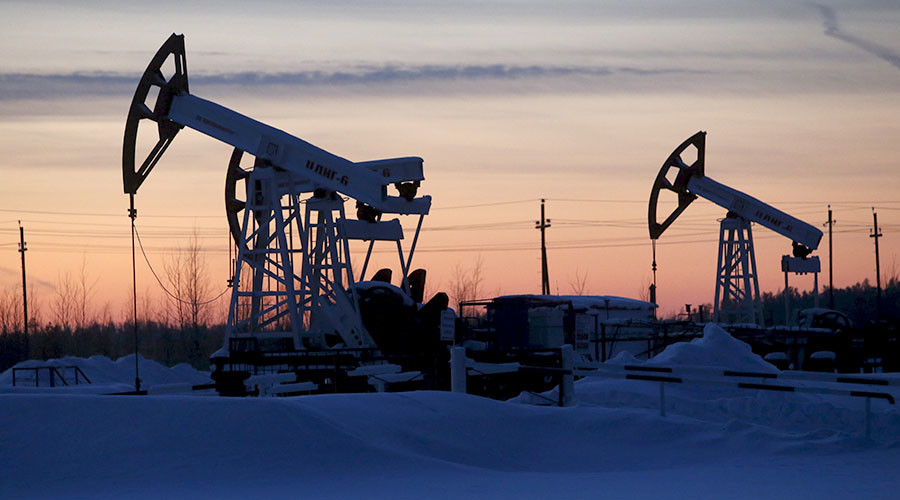
Russia to work with OPEC on oil market rebalancing

Image result for russia oil
Russia is ready to continue working with OPEC to help rebalance oil markets, a Russian energy source said on Wednesday, adding that Moscow welcomed a flexible approach by OPEC's leader Saudi Arabia to accommodate rising output from Nigeria and Libya.

"We welcome the constructive approach and flexibility of our partners in addressing the challenges which arise on the path towards a balanced market," the source, who is close to the Russian delegation negotiating with OPEC, said.

"Russia itself is fully committed to the spirit of the initiative aimed at stabilizing global crude markets and will continue working with other countries to achieve this goal."

On Tuesday, a Saudi Arabian industry source said the kingdom hoped to accommodate the rise in production from Libya and Nigeria through supply adjustments elsewhere but emphasized a need to work together with other producers.

Output from Nigeria and Libya has reached a multi-year high in recent weeks, delaying a long-awaited oil market rebalancing.

Six ministers from the Organization of the Petroleum Exporting Countries and non-OPEC producers, including Saudi Arabia and Russia, will meet in St Petersburg, Russia, on July 24 to discuss compliance with production cuts and progress toward market rebalancing.

Source: Reuters

segunda-feira, 10 de julho de 2017

Trump backtracks on cyber unit with Russia after harsh criticism

U.S. President Donald Trump on Sunday backtracked on his push for a cyber security unit with Russia, tweeting that he did not think it could happen, hours after his proposal was harshly criticized by Republicans who said Moscow could not be trusted.

Trump said on Twitter early on Sunday that he and Russian President Vladimir Putin discussed on Friday forming "an impenetrable Cyber Security unit" to address issues like the risk of cyber meddling in elections.

The idea appeared to be a political non-starter. It was immediately scorned by several of Trump's fellow Republicans, who questioned why the United States would work with Russia after Moscow's alleged meddling in the 2016 U.S. election.

"It's not the dumbest idea I have ever heard but it's pretty close," Senator Lindsey Graham of South Carolina told NBC's "Meet the Press" program.

Ash Carter, who was U.S. defense secretary until the end of former Democratic President Barack Obama's administration in January, told CNN flatly: "This is like the guy who robbed your house proposing a working group on burglary."

Trump's advisers, including Secretary of State Rex Tillerson and Treasury Secretary Steve Mnuchin, had recently sought to explain Trump's cyber push.

Mnuchin said on Saturday that Trump and Putin had agreed to create "a cyber unit to make sure that there was absolutely no interference whatsoever, that they would work on cyber security together."

But Trump returned to Twitter on Sunday to play down the idea, which arose at his talks with Putin at a summit of the Group of 20 nations in Hamburg, Germany.

"The fact that President Putin and I discussed a Cyber Security unit doesn't mean I think it can happen. It can't," Trump said on Twitter.

He then noted that an agreement with Russia for a ceasefire in Syria "can & did" happen.

Republican Senator John McCain of Arizona acknowledged Trump's desire to move forward with Russia, but added: "There has to be a price to pay."

"There has been no penalty," McCain, who chairs the Senate Armed Services Committee, told CBS' "Face the Nation" program according to a CBS transcript. "Vladimir Putin ... got away with literally trying to change the outcome ... of our election."

Trump argued for a rapprochement with Moscow in his campaign but has been unable to deliver because his administration has been dogged by investigations into the allegations of Russian interference in the election and ties with his campaign.

Special Counsel Robert Mueller is investigating the matter, including whether there may have been any collusion on the part of Trump campaign officials, as are congressional committees including both the House of Representatives and Senate intelligence panels.

Those probes are focused almost exclusively on Moscow’s actions, lawmakers and intelligence officials say, and no evidence has surfaced publicly implicating other countries despite Trump's suggestion that others could have been involved.

Moscow has denied any interference, and Trump says his campaign did not collude with Russia.

Representative Adam Schiff, the top Democrat on the House Intelligence Committee, told CNN's "State of the Union" program that Russia could not be a credible partner in a cyber security unit.

"If that’s our best election defense, we might as well just mail our ballot boxes to Moscow," Schiff added.

Separately, U.S. government officials said a recent hack into business systems of U.S. nuclear power and other energy companies was carried out by Russian government hackers, the Washington Post reported on Saturday.

'TIME TO MOVE FORWARD' WITH RUSSIA

Trump said he "strongly pressed President Putin twice about Russian meddling in our election. He vehemently denied it."

He added: "We negotiated a ceasefire in parts of Syria which will save lives. Now it is time to move forward in working constructively with Russia!"

In Trump's first attempt at ending the six-year Syrian civil war, the United States, Russia and Jordan on Friday reached a ceasefire and "de-escalation agreement" for southwestern Syria. The ceasefire was holding hours after it took effect on Sunday, a monitor and two rebel officials said.

Any joint U.S.-Russia cyber initiative would have been a different matter. Depending how much it veered into military or espionage operations, it could have faced major legal hurdles.

Language in the 2017 National Defense Authorization Act prohibits the Pentagon, which includes the National Security Agency and the U.S. military's Cyber Command, from using any funds for bilateral military cooperation with Russia.

Michael McFaul, a former U.S. ambassador to Russia, also noted restrictions on sharing information with Russia that would clearly prohibit offering Moscow a sense of U.S. cyber capabilities. Russia would be similarly adverse to revealing its capabilities to the United States, he noted.

"It just will not happen," McFaul told Reuters.

Source: Reuters

sexta-feira, 30 de junho de 2017

Despite hacking charges, U.S. tech industry fought to keep ties to Russia spy service

FILE PHOTO: Police guard the FSB headquarters during an opposition protest in Moscow, Russia, on March 5, 2012.  REUTERS/Mikhail Voskresensky/File Photo

As U.S. officials investigated in January the FSB's alleged role in election cyber attacks, U.S. technology firms were quietly lobbying the government to soften a ban on dealing with the Russian spy agency, people with direct knowledge of the effort told Reuters.

New U.S. sanctions put in place by former President Barack Obama last December - part of a broad suite of actions taken in response to Russia's alleged meddling in the 2016 presidential election - had made it a crime for American companies to have any business relationship with the FSB, or Federal Security Service.

U.S. authorities had accused the FSB, along with the GRU, Russia's military intelligence agency, of orchestrating cyber attacks on the campaign of Democratic presidential candidate Hillary Clinton, a charge Moscow denies.

But the sanctions also threatened to imperil the Russian sales operations of Western tech companies. Under a little-understood arrangement, the FSB doubles as a regulator charged with approving the import to Russia of almost all technology that contains encryption, which is used in both sophisticated hardware as well as products like cellphones and laptops.

Worried about the sales impact, business industry groups, including the U.S.-Russia Business Council and the American Chamber of Commerce in Russia, contacted U.S. officials at the American embassy in Moscow and the Treasury, State and Commerce departments, according to five people with direct knowledge of the lobbying effort.

The campaign, which began in January and proved successful in a matter of weeks, has not been previously reported.

In recent years, Western technology companies have acceded to increasing demands by Moscow for access to closely guarded product security secrets, including source code, Reuters reported last week.[nL1N1JK1ZF] Russia's information technology market is expected to reach $18.4 billion this year, according to market researcher International Data Corporation.

The sanctions would have meant the Russian market was "dead for U.S. electronics” said Alexis Rodzianko, president of the American Chamber of Commerce in Russia, who argued against the new restrictions. “Every second Russian has an iPhone, iPad, so they would all switch to Samsungs," he said.

A spokesman for the U.S. Commerce Department Bureau of Industry and Security declined to comment. A State Department official said Washington considered a range of factors before amending the FSB sanction and regularly works with U.S. companies to assess the impact of such policies.

The lobbyists argued the sanction could have stopped the sale of cars, medical devices and heavy equipment, all of which also often contain encrypted software, according to a person involved in the lobbying effort. The goal of the sanctions was to sever U.S. business dealings with the FSB - not end American technology exports to Russia entirely, the industry groups argued.

“The sanction was against a government agency that has many functions, only one of them being hacking the U.S. elections,” said Rodzianko.

The lobbyists assembled representatives from the tech, automotive and manufacturing sectors to make the case to the U.S. Treasury Department, said the person involved in the lobbying effort.

The industry groups did not argue against the intent of the sanction but asked for a narrow exception that would allow them to continue to seek regulatory approvals from the FSB while still keeping in place the broader ban on doing business with the spy agency.

"PUNISHMENT FOR VERY BAD ACTS"  

The industry groups represent a number of technology firms with a large presence in Russia, including Cisco and Microsoft.

Reuters was unable to determine which companies were directly involved in the lobbying. Microsoft said it did not ask for changes to the sanctions. In a statement, Cisco said it also did not seek any changes to the sanction but had asked the Treasury Department for clarification on how it applied.

In order to get encrypted technology into Russia, companies need to obtain the blessing of the FSB, a process that can sometimes take months or even years of negotiation. Before granting that approval, the agency can demand sensitive security data about the product, including source code - instructions that control the basic operations of computer equipment.

The United States has accused Russia of a growing number of cyber attacks against the West. U.S. officials say they are concerned that Moscow’s reviews of product secrets could be used to find vulnerabilities to hack into the products.

Some U.S. government officials rejected the industry groups' arguments. They openly embraced the prospect of any ripple effect that cut further trade with Russia.

Kevin Wolf was assistant secretary at the Commerce Department and oversaw export control policy when the FSB sanction was put in place. Wolf said within days of the sanction taking effect, Commerce received numerous calls from industry groups and companies warning of the unintended consequences.

But for Wolf, who was "furious" with Moscow over the alleged cyber attacks, any additional curbs on trade with Russia was a bonus rather than an unintended downside.

"I said, 'Great, terrific, fuck 'em ... The whole point is to interfere with trade'," recounted Wolf. “The sanction was meant to impose pain (on Russia) and send a signal as punishment for very bad acts."

Wolf left the Commerce Department when President Donald Trump took office on Jan. 20.

Other officials felt that the impact on legitimate trade was too great. “The intention of the sanction was not to cut off tech trade with Russia,” said a U.S. official with direct knowledge of the process.

The lobbyists had also argued that since the sanctions only applied to U.S. technology makers, it would put them at a disadvantage to European and Asian companies who would still be able to interact with the FSB and sell products in Russia.

"We were asking for a narrow technical fix that would give a fair deal for American companies," Dan Russell, CEO of the U.S.-Russia Business Council, said in an interview.

The advocacy worked. State and Treasury officials began working to tweak the sanction in January before Obama left office, according to people involved in the process.

On Feb. 2, the Treasury Department created an exception to the sanction, about two weeks after Trump took office, to allow tech companies to continue to obtain approvals from the FSB.

Source: Reuters

sexta-feira, 23 de junho de 2017

Under pressure, Western tech firms bow to Russian demands to share cyber secrets


Western technology companies, including Cisco, IBM and SAP, are acceding to demands by Moscow for access to closely guarded product security secrets, at a time when Russia has been accused of a growing number of cyber attacks on the West, a Reuters investigation has found.

Russian authorities are asking Western tech companies to allow them to review source code for security products such as firewalls, anti-virus applications and software containing encryption before permitting the products to be imported and sold in the country. The requests, which have increased since 2014, are ostensibly done to ensure foreign spy agencies have not hidden any "backdoors" that would allow them to burrow into Russian systems.

But those inspections also provide the Russians an opportunity to find vulnerabilities in the products' source code - instructions that control the basic operations of computer equipment - current and former U.S. officials and security experts said.

While a number of U.S. firms say they are playing ball to preserve their entree to Russia's huge tech market, at least one U.S. firm, Symantec, told Reuters it has stopped cooperating with the source code reviews over security concerns. That halt has not been previously reported.

Symantec said one of the labs inspecting its products was not independent enough from the Russian government.

U.S. officials say they have warned firms about the risks of allowing the Russians to review their products' source code, because of fears it could be used in cyber attacks. But they say they have no legal authority to stop the practice unless the technology has restricted military applications or violates U.S. sanctions.

From their side, companies say they are under pressure to acquiesce to the demands from Russian regulators or risk being shut out of a lucrative market. The companies say they only allow Russia to review their source code in secure facilities that prevent code from being copied or altered. (Graphic on source code review process: tmsnrt.rs/2sZudWT)

The demands are being made by Russia’s Federal Security Service (FSB), which the U.S. government says took part in the cyber attacks on Hillary Clinton’s 2016 presidential campaign and the 2014 hack of 500 million Yahoo email accounts. The FSB, which has denied involvement in both the election and Yahoo hacks, doubles as a regulator charged with approving the sale of sophisticated technology products in Russia.

The reviews are also conducted by the Federal Service for Technical and Export Control (FSTEC), a Russian defense agency tasked with countering cyber espionage and protecting state secrets. Records published by FSTEC and reviewed by Reuters show that from 1996 to 2013, it conducted source code reviews as part of approvals for 13 technology products from Western companies. In the past three years alone it carried out 28 reviews.

A Kremlin spokesman referred all questions to the FSB. The FSB did not respond to requests for comment. FSTEC said in a statement that its reviews were in line with international practice. The U.S. State Department declined to comment.

Moscow's source code requests have mushroomed in scope since U.S.-Russia relations went into a tailspin following the Russian annexation of Crimea in 2014, according to eight current and former U.S. officials, four company executives, three U.S. trade attorneys and Russian regulatory documents.

In addition to IBM, Cisco and Germany's SAP, Hewlett Packard Enterprise Co and McAfee have also allowed Russia to conduct source code reviews of their products, according to people familiar with the companies' interactions with Moscow and Russian regulatory records.

Until now, little has been known about that regulatory review process outside of the industry. The FSTEC documents and interviews with those involved in the reviews provide a rare window into the tense push-and-pull between technology companies and governments in an era of mounting alarm about hacking.

Roszel Thomsen, an attorney who helps U.S. tech companies navigate Russia import laws, said the firms must balance the dangers of revealing source code to Russian security services against possible lost sales.

"Some companies do refuse," he said. "Others look at the potential market and take the risk."

"WE HAVE A REAL CONCERN"

If tech firms do decline the FSB's source code requests, then approval for their products can be indefinitely delayed or denied outright, U.S. trade attorneys and U.S. officials said. The Russian information technology market is expected to be worth $18.4 billion this year, according to market researcher International Data Corporation (IDC).

Six current and former U.S. officials who have dealt with companies on the issue said they are suspicious about Russia's motives for the expanded reviews.

"It’s something we have a real concern about," said a former senior Commerce Department official who had direct knowledge of the interaction between U.S. companies and Russian officials until he left office this year. "You have to ask yourself what it is they are trying to do, and clearly they are trying to look for information they can use to their advantage to exploit, and that’s obviously a real problem."

However, none of the officials who spoke to Reuters could point to specific examples of hacks or cyber espionage that were made possible by the review process.

Source code requests are not unique to Russia. In the United States, tech companies allow the government to audit source code in limited instances as part of defense contracts and other sensitive government work. China sometimes also requires source code reviews as a condition to import commercial software, U.S. trade attorneys say.

"CLEAN ROOMS"

The reviews often takes place in secure facilities known as "clean rooms." Several of the Russian companies that conduct the testing for Western tech companies on behalf of Russian regulators have current or previous links to the Russian military, according to their websites.

Echelon, a Moscow-based technology testing company, is one of several independent FSB-accredited testing centers that Western companies can hire to help obtain FSB approval for their products.

Echelon CEO Alexey Markov told Reuters his engineers review source code in special laboratories, controlled by the companies, where no software data can be altered or transferred.

Markov said Echelon is a private and independent company but does have a business relationship with Russia’s military and law enforcement authorities.

Echelon’s website touts medals it was awarded in 2013 by Russia’s Ministry of Defense for "protection of state secrets." The company’s website also sometimes refers to Markov as the "Head of Attestation Center of the Ministry of Defense."

In an email, Markov said that title is only intended to convey Echelon’s role as a certified outside tester of military technology testing. The medals were generic and insignificant, he said.

But for Symantec, the lab "didn't meet our bar" for independence, said spokeswoman Kristen Batch.

“In the case of Russia, we decided the protection of our customer base through the deployment of uncompromised security products was more important than pursuing an increase in market share in Russia,” said Batch, who added that the company did not believe Russia had tried to hack into its products.

In 2016, the company decided it would no longer use third parties, including Echelon, that have ties to a foreign state or get most of their revenue from government-mandated security testing.

"It poses a risk to the integrity of our products that we are not willing to accept," she said.

Without the source code approval, Symantec can no longer get approval to sell some of its business-oriented security products in Russia. "As a result, we do minimal business there," she said.

Markov declined to comment on Symantec’s decision, citing a non-disclosure agreement with the company.

TRUSTED LABS

Over the past year, HP has used Echelon to allow FSTEC to review source code, according to the agency's records. A company spokesman declined to comment.    

An IBM spokesman confirmed the company allows Russia to review its source code in secure, company-controlled facilities "where strict procedures are followed."

FSTEC certification records showed the Information Security Center, an independent testing company based outside Moscow, has reviewed IBM’s source code on behalf of the agency. The company was founded more than 20 years ago under the auspices of an institute within Russia’s Ministry of Defense, according to its website. The company did not respond to requests for comment.

In a statement, McAfee said the Russia code reviews were conducted  at "certified testing labs" at company-owned premises in the United States.

SAP allows Russia to review and test source code in a secure SAP facility in Germany, according to a person familiar with the process. In a company statement, SAP said the review process assures Russian customers “their SAP software investments are safe and secure.”

Cisco has recently allowed Russia to review source code, according to a person familiar with the matter.

A Cisco spokeswoman declined to comment on the company's interactions with Russian authorities but said the firm does sometimes allow regulators to inspect small parts of its code in "trusted" independent labs and that the reviews do not compromise the security of its products.

Before allowing the reviews, Cisco scrutinizes the code to ensure they are not exposing vulnerabilities that could be used to hack the products, she said.

Source: Reuters

quarta-feira, 17 de maio de 2017

North Korea launches ferry service to Russia's far east

North Korea launched a ferry service to the Russian city of Vladivostok on Wednesday to develop links and boost economic cooperation, the North's state media said, as it faces increasing isolation over its weapons development.

Experts have said North Korea's leader, Kim Jong Un, may be hoping closer ties with Russia would help if China, the North's main economic benefactor, steps up sanctions against it over its weapons programs, in defiance of U.N. resolutions.

Russian President Vladimir Putin said on Monday that while Moscow was opposed to any new countries acquiring nuclear weapons, the world should talk to North Korea rather than threaten it.

The ferry, the Mangyongbong, set sail from the North Korean port of Rajin, the North's KCNA news agency said.

"Mangyongbong's operation as the Rajin-Vladivostok international tourist liner will make a positive contribution to developing marine transport and economic cooperation and tourism between the two countries," it added.

The Russian consul general based in the nearby city of Chongjin saw the ferry off, it said.

The Mangyongbong was in service between the North and Japan before Japan suspended its operations in 2006 after a North Korean missile test.

North Korea fired a ballistic missile on Sunday that landed in the sea near Russia.

The United States has been discussing possible new U.N. sanctions with China, which disapproves of the North's development of nuclear weapons and ballistic missiles to deliver them.

Russia, especially the port of Vladivostok, is home to one of the largest overseas communities of North Koreans in the world, and they send home many thousands of dollars in much-needed hard currency each month.

The ferry service is expected to carry up to 200 passengers and 1,000 tonnes of cargo six times a month between North Korea and Vladivostok.

Source: Reuters

segunda-feira, 15 de maio de 2017

Saudi Arabia, Russia push to extend oil output cuts until March 2018

Saudi Arabia and Russia, the world's two top oil producers, agreed on Monday on the need to extend oil output cuts for a further nine months until March 2018 to rein in a global crude glut, pushing up prices.

The timing of the announcement ahead of OPEC's next official meeting on May 25 and the statement's strong wording surprised markets, and the move is expected to go a long way to ensure that other OPEC members and producers who participated in the initial round of cuts fall into line.

In a joint statement that followed an earlier meeting, Saudi energy minister Khalid al-Falih and his Russian counterpart Alexander Novak said they had agreed to prolong an existing deal until March next year.

The ministers pledged "to do whatever it takes" to reduce global inventories to their five-year average and expressed optimism they will secure support from producers beyond those in the current deal, the statement said.

"There has been a marked reduction to the inventories, but we're not where we want to be in reaching the five-year average," Falih told a briefing in Beijing alongside Novak.

"We've come to conclusion that the agreement needs to be extended."

Saudi, the defacto leader of OPEC, and Russia, the world's biggest producer, together control a fifth of global supplies, but have been spurred into action as crude futures LCOc1CLc1 have languished around $50 per barrel.

Under the current agreement that started on Jan. 1, the Organization of the Petroleum Exporting Countries (OPEC), and other producers including Russia pledged to cut output by almost 1.8 million barrels per day (bpd) during the first half of the year.

While it was broadly expected that OPEC and Russia would agree to extend the cut, the timing and wording of the statement sent crude prices up more than 1.5 percent in Asian trading.[O/R]

"I think OPEC and Russia recognize that in order to get the market back on their side they will need 'shock and awe' tactics where they need to go above and beyond a simple extension of the deal," said Virendra Chauhan, Singapore-based analyst at Energy Aspects.

"The market will also be looking at export cuts and not just production cuts, which is what is required to rebalance the market."

Russia's top producer Rosneft helped prepare the deal and is ready to comply with the extension, according to Russian media.

U.S. SHALE, THE UNKNOWN

If producers maintain their cuts at the current pace, it could push the market into a small deficit by the fourth quarter, said Edward Bell, director for commodity research at Emirates NBD in Dubai.

But one major unknown will be the response of low-cost U.S. shale producers, which could undermine the unified effort to prop up the market.

The United States did not participate in the original agreement to cut supplies and producers there have ramped up output this year, buoyed by the recovery in prices from multi-year lows hit in January 2016.

U.S. drilling activity RIG-OL-USA-BHI last week rose to its highest in two years, while U.S. production has jumped more than 10 percent since its mid-2016 trough.

A jump in U.S. exports to Asia, the world's biggest and fastest growing market and the last region in which OPEC supplies dominate, is a particular worry for the producer club.

"Russia and Saudi Arabia may be trying to coordinate a push to keep access to their most important market (China) in their favor and encourage Chinese importers to displace alternative cargoes," said Bell.

An OPEC source familiar with the market situation told Reuters earlier on Monday that oil inventories in floating storage have declined by one-third since the start of the year.

Source: Reuters

sexta-feira, 12 de maio de 2017

Trump denies collusion with Russia after firing Comey

(FILE) US President Donald J. Trump meets with former Secretary of State Henry Kissinger (out of frame) in the Oval Office at the White House, Washington, DC, USA, 10 May 2017. EPA/Molly Riley / POOL
The president of the United States denied on Thursday any collusion between his presidential campaign and Russia in his first interview since firing FBI chief James Comey, who was conducting an investigation into the matter.

"There was no collusion between my campaign and the Russians," Trump said in the interview with US network NBC.

The president said that investigating him and his campaign is a waste of public money, but also insisted that he wants the probe to be done "absolutely properly."

"I want that to be so strong and so good. And I want it to happen," added Trump, who said he also wanted to know if Russia did something to affect the campaign.

The interview came two days after the dismissal of Comey, who was investigating the alleged links between Russia and Trump's presidential campaign.

Trump called Comey "a showboat" and told NBC he believed the FBI had been out of control for some time.

He also claimed that Comey had personally assured him that he was not under investigation by the FBI.

"I said, 'If it's possible would you let me know, am I under investigation?'" Trump said, to which the former FBI director reportedly replied: "You are not under investigation."

Aside from the FBI, Congress is also investigating suspected Russian interference in the November election, including the alleged relationship between Russian officials and the president's campaign.

Source: EFE

quarta-feira, 26 de abril de 2017

Russia says U.S. missile strike on Syria was a threat to its forces

FILE PHOTO: Battle damage assessment image of Shayrat Airfield, Syria, is seen in this DigitalGlobe satellite image, released by the Pentagon following U.S. Tomahawk Land Attack Missile strikes from Arleigh Burke-class guided-missile destroyers, the USS Ross and USS Porter on April 7, 2017.     DigitalGlobe/Courtesy U.S. Department of Defense/Handout via REUTERS
Russian Defence Minister Sergei Shoigu complained on Wednesday that a U.S. missile strike on a Syrian air base earlier this month had posed a threat to Russian troops and was forcing Moscow to take extra measures to protect them.

Speaking at a security conference in Moscow, Shoigu restated Russia's view that the strike -- which Washington conducted in response to what it said was a deadly chemical weapons attack by Syrian government forces -- was "a crude violation of international law."

U.S. officials said at the time that they had informed Russian forces ahead of the strikes. No Russian personnel were injured in the attack.

As well as housing Syrian military jets, satellite imagery suggested that the base which was struck was home to Russian special forces and military helicopters, part of the Kremlin's effort to help the Syrian government fight Islamic State and other militant groups.

"Washington's action created a threat to the lives of our servicemen who are fighting against terrorism in Syria," said Shoigu.

"Such steps are forcing us to take extra measures to ensure the safety of Russian forces." He did not specify what those measures were.

The Russian Defence Ministry said after the U.S. strike that Syrian air defenses would be beefed up, while Prime Minister Dmitry Medvedev complained that the attack was just one step away from clashing with the Russian military.

Source: Reuters

quarta-feira, 12 de abril de 2017

White House accuses Russia of Syria chemical attack 'cover up'


President Donald Trump's administration accused Russia on Tuesday of trying to shield Syria's government from blame for a deadly gas attack, as Secretary of State Rex Tillerson brought a Western message to Moscow condemning its support for President Bashar al-Assad.

Trump, who has faced criticism for lacking a broader strategy to deal with the Syria crisis, insisted he has no plans to "go into" the war-torn country.

Senior White House officials, briefing reporters on condition of anonymity, said Assad's government carried out the April 4 sarin nerve gas attack on civilians in Syria's Idlib province that killed 87 people, including many children, to put pressure on rebels making advances in the area.

Russia has defended the Syrian leader against U.S. allegations that his forces carried out the attack, saying there was no evidence. Russia has blamed Syrian rebels.

"It's clear that the Russians are trying to cover up what happened there," one White House official said.

White House spokesman Sean Spicer later told reporters that the facts backed up the U.S. version of events. "Russia is on an island when it comes to its support of Syria or its lack of, frankly, acknowledgment of what happened," he told reporters.

However, at the same briefing, Spicer drew criticism after he sought to underscore the ghastliness of the gas attack by saying: "You had someone as despicable as Hitler who didn't even sink to using chemical weapons." Nazi Germany used gas chambers to kill millions of Jews during the Holocaust.

Spicer later apologized and said he should not have made the comparison. "It was a mistake. I shouldn't have done it and I won't do it again," Spicer told CNN in an interview. "It was inappropriate and insensitive."

The White House officials said Russia has frequently offered multiple, conflicting accounts of Syrian government aggression including the incident in the village of Khan Sheikhoun to sow doubt within the international community.

The United States launched 59 cruise missiles at a Syrian airfield on Thursday to retaliate after the attack. The strikes thrust Trump, who came to power in January calling for warmer ties with Russia, and his administration into confrontation with Moscow.

Chinese President Xi Jinping told Trump in a telephone call on Wednesday that “any use of chemical weapons is unacceptable” and urged a political solution for Syria, Chinese state broadcaster CCTV said of the telephone exchange.

"(We) must persevere with moving towards a political solution for the Syria issue. It is very important that the United Nations Security Council maintains unity on the Syria issue. (I) hope the Security Council can speak with a single voice," CCTV cited Xi as saying.  

Trump's ambassador to the United Nations, Nikki Haley, said on Tuesday she thought Russia knew about the chemical attack in advance. "They didn’t look shocked. They didn’t look surprised. They were so quick to defend. And then the evidence comes out, and we see exactly what it is and we know exactly what the environment was. Then you realize," she said on CNN.

U.S. intelligence indicates that the chemical agent in the attack was delivered by Syrian Su-22 aircraft that took off from the Shayrat airfield, according to a White House report given to reporters.

In a four-page document, the White House sought to rebut many of Moscow’s claims about the circumstances of the attack. It said the Syrian planes were in the vicinity of Khan Sheikhoun about 20 minutes before the attack and left shortly afterward.

"Additionally, our information indicates personnel historically associated with Syria's chemical weapons program were at Shayrat airfield in late March making preparations for an upcoming attack in northern Syria, and they were present at the airfield on the day of the attack," the report said.

Washington wants Russia to stop supporting Assad, who has been fighting a six-year-long civil war against mostly Sunni Muslim rebels, also with the backing of Shi'ite Muslim Iran.

TILLERSON MESSAGE

Tillerson carried a message from world powers to Moscow denouncing Russian support for Assad, as the Trump administration took on America's traditional mantle as leader of a unified West.

Tillerson earlier met foreign ministers from the Group of Seven advanced economies and Middle Eastern allies in Italy. They endorsed a joint call for Russia to abandon Assad.

"It is clear to us the reign of the Assad family is coming to an end," Tillerson told reporters in Italy. "We hope that the Russian government concludes that they have aligned themselves with an unreliable partner in Bashar al-Assad."

He said Russia had failed in its role as sponsor of a 2013 deal in which Assad promised to give up chemical weapons.

Russia says the chemicals that killed civilians last week belonged to rebels, not Assad's government, and accused the United States of an illegal aggression on a false pretext.

Russian President Vladimir Putin said on Tuesday he believed Washington planned more missile strikes, and that rebels were planning to stage chemical weapons attacks to provoke them.

"We have information that a similar provocation is being prepared ... in other parts of Syria including in the southern Damascus suburbs where they are planning to again plant some substance and accuse the Syrian authorities of using" chemical weapons, Putin said.

Trump denied further plans in Syria.

"We're not going into Syria," he said in an interview with the New York Post. "Our policy is the same; it hasn’t changed. We’re not going into Syria."

A senior Trump administration official called Putin's remarks part of a Russian "disinformation campaign."

The United States, Britain and France have proposed a revised draft resolution to the 15-member U.N. Security Council similar to a text they circulated last week pushing Syria's government to cooperate with investigators.

TURNING POINT

The secretary of state's role as messenger for a united G7 position is a turning point for Trump, who in the past alarmed allies by voicing skepticism about the value of U.S. support for traditional friends, while calling for closer ties with Moscow.

Tillerson is a former chairman of oil company Exxon Mobil Corp, which has gigantic projects in Russia. Putin awarded him Russia's "Order of Friendship" in 2013.

He is due to meet Russian Foreign Minister Sergei Lavrov in Moscow on Wednesday. The Kremlin has said Tillerson has no meeting scheduled with Putin this trip, although some Russian media have reported such a meeting could take place.

Western countries have been calling for Assad's departure since 2011, the start of a civil war that has killed at least 400,000 people and created the world's worst refugee crisis.

Assad's position on the battlefield became far stronger after Russia joined the war to support him in 2015. The United States and its allies are conducting air strikes in Syria against Islamic State, but until last week Washington had avoided targeting forces of Assad's government directly.

U.S. Defense Secretary Jim Mattis said on Tuesday the United States' military policy in Syria had not changed and remains focused on defeating Islamic State.

Source: Reuters

segunda-feira, 3 de abril de 2017

Blast in St. Petersburg metro station kills 9: authorities


Photo: Reuters

At least nine people were killed and 20 were injured when an explosion tore through a train carriage in the St. Petersburg metro system on Monday, the Russian National Anti-Terrorist Committee said.

Interfax news agency quoted an unnamed source as saying the blast, which occurred when the train was between two stations, was caused by a bomb filled with shrapnel.

President Vladimir Putin, who was in the city for a meeting with Belarus's leader, said he was considering all possible causes for the blast, including terrorism and was consulting with security services.

Ambulances and fire engines descended on the concrete-and-glass Sennaya Ploshchad metro station. A helicopter hovered overhead as crowds gathered to observe rescue operations.

"I appeal to you citizens of St. Petersburg and guests of our city to be alert, attentive and cautious and to behave in a responsible matter in light of events," St Petersburg Governor Georgy Poltavchenko said in an address.

An attack on St Petersburg, Russia's old imperial capital, would have some symbolic force for any militant group, especially Islamic State or Chechen secessionist rebels. Attacks in the past have largely concentrated on Moscow, including an attack on an airport, a theater and in 2010 a metro train.

Video showed injured people lying bleeding on a platform, some being treated by emergency services and fellow passengers. Others ran away from the platform amid clouds of smoke, some screaming or holding their hands to their faces.

A huge hole was blown open in the side of a carriage with metal wreckage strewn across the platform. Passengers were seen hammering at the windows of one closed carriage. Russian TV said many had suffered lacerations from glass shards and metal.

Russia has been the target of attacks by separatist Islamist Chechen militants in past years. Islamic State, which has drawn recruits from the ranks of Chechen rebels, has also threatened attacks across Russia in retaliation for Russian military intervention in Syria.

The Russian air force and special forces have been supporting President Bashar al-Assad in fighting rebel groups and Islamic State fighters now being driven out of their Syrian strongholds.

ALL STATIONS CLOSED

St. Petersburg emergency services at first said that there had been two explosions. But a source in the emergency services later said that there had been only one but that the explosion had occurred in a tunnel between stations.

The blast occurred at 2.40 p.m., well shy of the evening rush hour.

Authorities closed all St. Petersburg metro stations. The Moscow metro said it was taking unspecified additional security measures in case of an attack there.

Russia has been on particular alert against Chechen rebels returning from Syria and wary of any attempts to resume attacks that dogged the country several years ago.

At least 38 people were killed in 2010 when two female suicide bombers detonated bombs on packed Moscow metro trains.

Over 330 people, half of them children, were killed in 2004 when police stormed a school in southern Russia after a hostage taking by Islamist militants. In 2002, 120 hostages were killed when police stormed a Moscow theater to end another hostage-taking.

Putin, as prime minister, launched a 1999 campaign to crush a separatist government in the Muslim southern region of Chechnya, and as president continued a hard line in suppressing rebellion.

Source: Reuters

segunda-feira, 27 de março de 2017

Brazil sees Russian, Chinese, Spanish interest in north-south rail

Brazil's planned auction of the rights to expand and operate the North-South railway between Tocantins and Sao Paulo states has drawn the interest of major operators from countries including Russia, China and Spain, a government official said on Friday.

Adalberto Santos Vasconcelos, the special secretary running President Michel Temer's infrastructure investment program, told Reuters in an interview that interest was strong in the auction, which is scheduled for the second half of this year.

He also said the government may grant the winner of a concession for the Ferrogrão railway project in northern Brazil exclusive rights to operate along those rails to compensate for roughly 12 billion reais ($4 billion) in needed investments.

The upcoming rail auctions are part of the government's efforts to raise 45 billion reais in private investment for infrastructure projects to boost a recovery from Brazil's worst recession in over a century.

Source: Reuters

sexta-feira, 24 de março de 2017

Putin meets with Le Pen, denies Russia wants to influence French elections

Marine Le Pen (L) shakes hands with Russian President Vladimir Putin (R) during their meeting in the Kremlin in Moscow, Russia, Mar. 24, 2017. EPA/MICHAEL KLIMENTYEV/SPUTNIK/KREMLIN
The Russian President on Friday met with the far-right French presidential candidate and denied that Moscow wanted to influence the upcoming national elections.

In an impromptu meeting with National Front (FN) candidate Marine Le Pen in Moscow, Vladimir Putin said he in no way wanted to influence events but that he had the right to meet with representatives from all political forces, as is done by Europe and the United States.

Source: EFE

quarta-feira, 15 de março de 2017

Putin disapproves of debating whether Russia should return to monarchy

File image of visitors attending an exhibition of the unique dual canvas with a portrait of the last Russian Tsar Nicholas II on one side and Soviet leader Vladimir Lenin on the other side in the Stieglitz Art and Industry Academy in St. Petersburg, Russia, Nov. 30, 2016.  EPA/ANATOLY MALTSEV
The Russian president on Wednesday expressed his disapproval at the re-emerging debate in the country as to whether it should return to a monarchic system, a Kremlin spokesman said.

In the past few years, there have been several voices in Russia calling for the restoration of the monarchy, a century after the last Tsar, Nicholas II Romanov, abdicated in the face of revolution.

Source: EFE

quarta-feira, 22 de fevereiro de 2017

Russia's Progress MS-05 spacecraft takes off for ISS carrying vital supplies

A photo made available by the press service of the State Space Corporation ROSCOSMOS shows a Soyuz-U rocket booster with a Progress MS-05 cargo spacecraft lifting off from the Cosmodrome Baikonur in Kazakhstan, Feb. 22, 2017. EPA/ROSCOSMOS PRESS SERVICE
Russia on Wednesday launched a spacecraft carrying vital supplies to the International Space Station, as evident in photographs made available to epa.

Progress MS-05 launched from the Baikonur Cosmodrome in Kazakhstan early Wednesday using the Soyuz-U rocket, which undertook its 786th and final flight.

Source: EFE

sexta-feira, 10 de fevereiro de 2017

Putin sends condolences for death of Turkish soldiers in Russian airstrike

(FILE) Archive handout picture dated Oct. 5, 2015 shows Russian SU-24M bomber taking off from the Syrian Hmeymim airbase, outside Latakia, Syria.  
The President of Russia sent his condolences on Thursday to his Turkish counterpart for the death of Turkish soldiers during a Russian airstrike in Syria.
EPA/RUSSIAN DEFENCE MINISTRY PRESS SERVICE/HANDOUT
The president of Russia sent his condolences on Thursday to his Turkish counterpart for the death of Turkish soldiers during a Russian airstrike in Syria.

Russian president Vladimir Putin telephoned his counterpart Recep Tayyip Erdogan to convey his regrets and explain how the incident where a combat aircraft killed three and wounded 11 Turkish troops in northern Syria.

The incident occurred "this morning due to a Russian air force internal coordination breakdown at the time of establishing the coordinates to execute an airstrike against terrorists," Kremlin spokesman Dmitry Peskov told journalists.

The Turkish military died "during a joint operation aimed to liberate al-Bab" the Syrian village occupied by the Islamic State terror organization, Putin said according to Peskov.

The conversation between both leaders took place not long after the Russian General Staff acknowledged that three Turkish military had died during an "unintended" Russian airstrike in Syria, according to official Turkish sources.

Both parts decided to "improve the coordination mechanisms within the combined operations that are fighting terrorist forces in Syria."

Rusia and Turkey have experienced a similar incident when, in Nov. 2015, a Russian fighter-bomber was shot down by a Turkish fighter very close to the Turkish-Syrian border, which provoked a cooling of diplomatic relations between both countries.

Putin and Erdogan reconciled themselves in Aug. during a Moscow summit after the Turkish leader apologized for the downing of the Russian aircraft, that killed one of its two crew members.

There was also the incident of the Russian ambassador in Turkey, Andrei Karlov, gunned down in December while attending a photographic exhibition in Ankara.

Nonetheless, in early 2017, Turks and Russians began joint military operations against the extremist groups in Syria and brokered the Astana (Kazakstan) peace talks between the Syrian government and opposition forces.

Source: EFE

sexta-feira, 27 de janeiro de 2017

NATO, Russia and trade top the agenda for Trump talks with Britain's May

Britain's Prime Minister Theresa May acknowledges applause before speaking during the 2017 ''Congress of Tomorrow'' Joint Republican Issues Conference in Philadelphia, Pennsylvania, U.S. January 26, 2017.  REUTERS/Mark Makela
U.S. President Donald Trump and British Prime Minister Theresa May, who share an unusual bond as the products of anti-establishment uprisings, will sit down on Friday for what could be a difficult search for unity on NATO, Russia and trade.

The meeting will mark Trump’s first with a foreign leader since taking power a week ago, and it could go a long way toward determining how crucial Trump considers the traditional “special relationship” between the two countries.

Trump rode an anti-Washington wave to win on Nov. 8, and May gained power in July after the "Brexit" vote that has put her country on a path to separate from the European Union. The meeting will conclude with a joint White House news conference.

Trump has declared NATO obsolete and expressed a desire for warmer ties with Russia. May considers the trans-Atlantic alliance crucial and is skeptical of Russian President Vladimir Putin.

They both want to begin work on a bilateral trade agreement, which for May would provide proof of stability amid the Brexit breakup and for Trump would support his belief that he can negotiate one-on-one trade pacts.

"They both need this to be a success," said Heather Conley, a European expert at the Center for Strategic and International Studies think tank.

Trump, she said, "needs to demonstrate that he has a command of issues" while May "needs to hear strong messages of support for her vision of a Britain that works for everyone, a global Britain."

May, in a speech to Republican lawmakers gathered in Philadelphia on Thursday, suggested she saw the need for some reforms in NATO and for more countries to pay more to the alliance to help fund it, which has been Trump's main complaint about NATO.

"America’s leadership role in NATO – supported by Britain – must be the central element around which the alliance is built," May said.

But she said that EU nations "must step up" to ensure NATO remains the cornerstone of the West's defense.

Trump and May also seem somewhat at odds over how to deal with Russia. In her speech, May said Western leaders should "engage but beware" of Putin and should not accept Putin's claim that Eastern Europe is now in his sphere of influence.Trump, on the other hand, wants a strong U.S. relationship with Russia to fight Islamic State militants.

"I don't know Putin, but if we can get along with Russia, that's a great thing," Trump told Fox News' Sean Hannity" on Thursday. "It's good for Russia, it's good for us."

Source: Reuters