Mostrando postagens com marcador meat scandal. Mostrar todas as postagens

segunda-feira, 21 de agosto de 2017

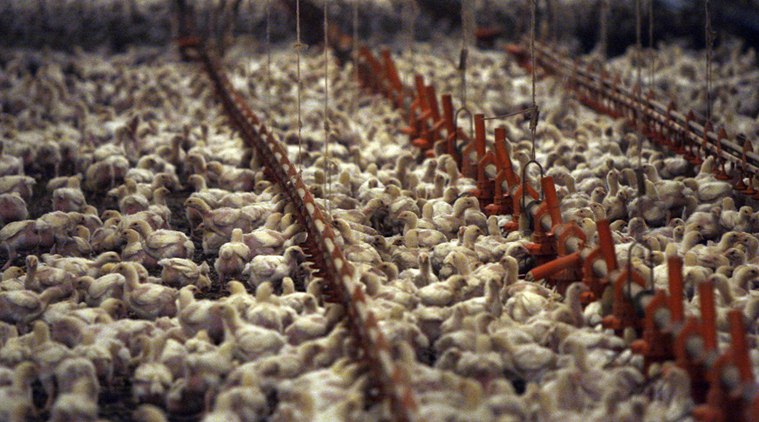
China launches probe into Brazilian broiler chicken imports

Image result for China launches probe into Brazilian broiler chicken imports

China on Friday launched an anti-dumping investigation into imports of Brazilian broiler chickens after a complaint from the domestic industry that the South American country has been selling its chicken below market value.

Brazil accounted for more than 50 percent of broiler product supplies to China, the world's No. 2 poultry consumer, between 2013 and 2016, according to a preliminary review, the Commerce Ministry said in a statement.

Any move to penalize imports, which are worth more than $1 billion a year, would be a major blow to Brazil's meat industry following a food safety scandal that threatened to tarnish the country's powerhouse protein industry.

ABPA, a group representing Brazilian chicken producers and exporters, denied they sell products below market prices, association president Francisco Turra told Reuters on Friday.

"We are very competitive and it is hard for the Chinese producer to understand," Turra said, reflecting on the surge of imports since the Chinese market opened to Brazilian poultry in 2009. "Such complaints are normal and we can defend ourselves."

Brazil faced similar claims from South Africa and Ukraine and won the cases, he said. Brazilian government officials did not immediately respond to requests for comment.

Shares of Brazil's BRF SA, the world's largest chicken exporter, fell 1 percent on Friday as the benchmark Bovespa stock index gained 0.2 percent.

A BRF representative declined to comment.

Brazil replaced the United States as the top chicken supplier after China slapped anti-dumping duties on U.S. broiler chicken products in 2010.

China is the biggest national consumer of Brazilian meat.

China relies on imports for its supply of white feather broiler chickens, which are favored by fast-food chains like KFC (YUM.N) and McDonalds (MCD.N) for their more rapid development and plumper meat. Yellow-feathered birds, which are native to China, are generally sold at retail.

The investigation comes just months after Beijing slapped hefty penalties on sugar imports from top growers such as Brazil and Thailand after lobbying by domestic mills.

In 2016, Brazil accounted for 85 percent of China's frozen chicken imports - almost 600,000 tonnes valued at as much as $1.23 billion, according to customs data.

The push by China's domestic industry for an anti-dumping probe came as poultry farmers and processors recover from the nation's worst outbreak of bird flu in years and struggle with falling demand.

"This is good news for the domestic chicken market," said a chicken farmer in northern China who gave his surname as Tan.

"The chicken market has been not so good since the second half of last year. Brazil is selling a lot to China at a cheap price while China has ample supplies itself."

In 2017, demand and output are expected to hit their lowest since 2006, according to U.S. government estimates. Domestic supplies are being hurt by low availability of grandparent breeder stock needed to produce more meat.

Worries about the deadly virus hurt demand for chicken meat and sent some regional prices to more than decade old lows in February.

Live broiler chicken prices in Shandong province, one of the nation's major producing areas, have since more than doubled, and were around 7.7 yuan ($1.15) on Friday, as the crisis passed and concerns about infection eased.

Import prices from Brazil have remained low in comparison, making it hard for the local industry to compete, analysts said.

Still, any curb on foreign supplies would likely boost domestic prices further, potentially denting demand for chicken as a cheap alternative to pork, the nation's favorite meat.

Broiler chicken sells for 14 yuan ($2.10) per kg, according to government data, almost one-third less than pork and more than 70 percent cheaper than beef and lamb.

Source: Reuters

--

Quer se tornar um influenciador digital?
Acesse hugocavalari.com, utilize o cupom jacksoncampos e tenha descontos exclusivos

sexta-feira, 23 de junho de 2017

U.S. bans fresh Brazil beef imports over safety concerns


The United States halted imports of fresh Brazilian beef on Thursday, the U.S. Department of Agriculture (USDA) said, after a high percentage of shipments failed to pass safety checks.

The USDA had "recurring concerns about the safety of the products intended for the American market," after increasing tests on Brazilian beef in March, according to a statement.

The agency raised scrutiny on Brazilian beef and ready-to-eat products as a precaution following an investigation into corruption involving Brazil's health inspectors that targeted meat companies JBS SA (JBSS3.SA) and BRF SA (BRFS3.SA).

JBS, the world's largest meat packer, declined to comment on the U.S. ban.

The USDA's action threatens the reputation of meat from Brazil, the world's top exporter of beef and poultry, even though the United States is not a top customer. It also could boost domestic sales in the United States.

"Product was already on the water and that's not going to be allowed in," Altin Kalo, a U.S. livestock analyst at Steiner Consulting Group, said about shipments headed to the United States from Brazil via boat.

Since March, the USDA has rejected 11 percent of Brazilian fresh beef products, compared to the rejection rate of 1 percent for shipments from the rest of the world, the agency said. The shipments, totaling about 1.9 million pounds, raised concerns about public health, animal health and sanitation, according to the USDA.

The agency said none of the rejected lots made it into the U.S. market.

The move to block Brazilian meat is a turnaround for Agriculture Secretary Sonny Perdue, who warned in March that Brazil might retaliate if the United States halted beef imports.

On Thursday, he said in a statement that "although international trade is an important part of what we do at USDA, and Brazil has long been one of our partners, my first priority is to protect American consumers."

The U.S. suspension will remain in place until Brazil's Agriculture Ministry "takes corrective action which the USDA finds satisfactory," according to the agency.

A slew of global buyers, including China, Egypt and Chile, curtailed imports of Brazilian meat after Brazilian federal police unveiled an investigation into alleged corruption in the sector on March 17.

Brazilian authorities said at the time that meat companies made payments to government health officials to forego inspections and cover up health violations.

China is not expected to follow the U.S. move as it only permits imports of frozen Brazilian beef, which has different requirements to fresh meat, said analysts.

Brazil is also China's top beef supplier, and would be difficult to replace in the short-term, said Pan Chenjun, senior animal protein analyst at Rabobank.

The United States began allowing shipments of fresh beef from Brazil last year after banning them due to concerns about foot and mouth disease in cattle.

Source: Reuters

sexta-feira, 5 de maio de 2017

Brazil says 10 nations undecided on resuming meat imports

Brazil's Agriculture Minister, Blairo Maggi  in Brasilia, Brazil March 29, 2017. REUTERS/Ueslei Marcelino
Brazil's Agriculture Minister Blairo Maggi said on Thursday that 10 countries have yet to decide whether to reopen their markets for Brazilian meat imports after a food safety scandal in March.

Major meat importers issued bans after Brazilian federal police unveiled a probe into alleged bribery of health officials by meat processing companies to skip inspections and ignore abuses.

Speaking on the sidelines of a soybean conference in Cuiabá, Maggi said the countries that remain undecided represent "a very small volume" of Brazil's meat export market.

He said Brazil's main customers have resumed buying after the government satisfactorily answered questions on the safety of products.

"They accepted our considerations, our answers," Maggi said, adding that government level discussions with other nations on the matter had concluded.

Source: Reuters

segunda-feira, 3 de abril de 2017

Most Brazilians disapprove of Temer government

Brazil's President Michel Temer reacts during a ceremony to mark the signing of a decree on new regulations for beef inspection, at the Planalto Palace in Brasilia, Brazil March 29, 2017. REUTERS/Ueslei Marcelino

A growing majority of Brazilians disapprove of President Michel Temer's scandal-plagued government, and faith is flagging in his ability to steer the country out of its worst recession ever, according to a poll published on Friday.

The survey by pollster Ibope, conducted between March 16 and 19, said the number of people who consider Temer's government "bad" or "terrible" rose to 55 percent from 46 percent in the previous survey carried out in December.

The proportion of those who rate Temer's government as "great" or "good" slipped to 10 percent from 13 percent, putting its popularity at the same level as leftist former president Dilma Rousseff in March last year, before she was impeached.

Six of Temer's cabinet ministers, including his two closest aides, have been named in plea bargain testimony for allegedly receiving under-the-table payments, casting uncertainty over his ability to pass reforms needed to restore fiscal discipline and pull Brazil from its worst recession on record.

The number of Brazilians that approve of how Temer is governing Brazil slid to 20 percent from 26 percent in December, while those that disapprove has risen to 73 percent from 64 percent in December, the poll said.

Distrust of the president has grown steadily since he took over from Rousseff, vowing to restore growth and business confidence to Latin America's largest country.

Almost eight in every 10 Brazilians (79 percent) now say they do not trust Temer, up from 72 percent three months ago, the survey showed.

The poll commissioned by the National Confederation of Industry lobby CNI surveyed 2,000 people and has a margin of error of two percentage points.

Source: Reuters

segunda-feira, 27 de março de 2017

China, others lift ban on meat imports in boost for Brazil


China lifted a ban on imports of meat from Brazil on Saturday after Brazilian authorities clarified details of a police investigation into alleged bribery of health inspectors, in a victory for President Michel Temer's efforts to stem damage from the probe.

The move by China, the biggest national consumer of Brazilian meat, was accompanied on Saturday by the lifting of import bans in Egypt and Chile, bringing hope of an end to a crisis that saw one-fifth wiped off the value of Brazilian pork and poultry exports last week.

A slew of major meat importers issued bans after Brazilian federal police unveiled on March 17 an investigation into alleged payments to government health officials by meat processing companies to forego inspections and ignore abuses, codenamed "Operation Weak Flesh".

Temer's government, alarmed the scandal could damage one of the few sectors that has defied a deep recession in Latin America's largest economy, launched a campaign to convince trade partners that any abuses were limited in scope.

Meat is Brazil's third-largest export, after soy and iron ore. The country sold around $13.5 billion in chicken, beef and pork products last year.

Agriculture Minister Blairo Maggi welcomed China's decision and said the government retained a ban on exports from 21 processing plants directly linked to the federal police investigation as it carried out its own inspections.

“Lifting this suspension was the result of a giant effort by Brazil to explain that the investigation targeted the conduct of individuals and not the quality of the meat," Maggi told Reuters.

Officials said that the only one of the 21 plants that exported to China is owned by Seara Alimentos Ltda, a unit of Brazil's JBS SA, the world's biggest meatpacking company.

JBS has strongly denied any wrongdoing and said it upholds strict quality standards.

Two sources in China confirmed that a ban remained in place on imports from the Seara plant, as well as any meat approved by seven Brazilian veterinary experts linked to the police investigation.

Brazilian meat imports have already started being cleared in Shanghai, one of the sources said.

China had suspended imports of all meat products from Brazil, the world's top beef exporter, on March 20 as a precautionary measure.

An aide to President Temer told Reuters that he planned to call Chinese leader Xi Jinping in the coming days. In a statement, Temer voiced confidence that other countries would follow China's example in lifting restrictions.

Chile on Saturday said it was ending a ban on meat purchases from Brazil, except for the 21 suspended plants, while Egypt also resumed imports after a two day-suspension.

South Korea had already called off a short-lived ban on chicken imports from Brazil's BRF SA on Tuesday, after just one day.

BRF, the world's largest poultry producer, has denied selling rotten meat and taking part in any corrupt activities.

The decision by China was crucial because of its size: it consumed some $1.75 billion in Brazilian meat imports last year.

In part, Brazil has been fortunate that rivals were ill-placed to fill the gap.

With China's second-largest beef supplier, Australia, still rebuilding its herd after drought, it could not meet fast-growing Chinese demand.

In the poultry sector, where Brazil supplies more than 85 percent of China's imports, other major producers, such as the United States and some smaller European markets, are banned from supplying to China due to bird flu outbreaks.

Despite the government's success in containing the damage from the scandal, sources familiar with the investigation said there was a large amount of unpublished evidence pointing to widespread fraud and not just isolated abuses in the meat industry.

Source: Reuters

Brazil's BRF says it continues some meat exports to Saudi Arabia

A meatpacking company BRF SA's logo is pictured in Sao Paulo, Brazil March 17, 2017. REUTERS/Paulo Whitaker
Brazil's BRF SA said it was continuing some exports to Saudi Arabia after the kingdom restricted Brazilian beef and poultry imports following accusations that bribery in Brazil allowed sales of rotten and salmonella-tainted meats.

Saudi Arabia's Food and Drug Authority said on Wednesday it had barred imports from four companies, including BRF, citing safety concerns.

But a spokeswoman for BRF told Reuters over the weekend that only one of its plants was covered by the order, without specifying the volume of exports affected.

"All other factories, including the plants that export to Saudi Arabia, remain functional," the company said in a statement.

Saudi authorities could not be reached for comment.

Source: Reuters

sexta-feira, 24 de março de 2017

EU asks Brazil to suspend meat shipments amid scandal

Members of the Public Health Surveillance Agency collect meats to analyse in their laboratory, at a supermarket in Rio de Janeiro, Brazil, March 20, 2017. REUTERS/Ricardo Moraes
The European Union has asked Brazil to voluntarily suspend all shipments of meat to its member countries to avoid imposing a ban that would take time to lift, but the Brazilian government has not agreed, EU diplomats in Brasilia told Reuters on Thursday.

Brazilian meat exports have in any case ground almost to a halt following a police investigation into corruption involving food-sanitation inspectors and accusations that rotten products were sold.

A spokeswoman said Brazilian Agriculture Minister Blairo Maggi was not aware of the request.

The Brazilian government suspended meat shipments from the 21 meat-packing plants under investigation by the federal police, while insisting the quality of Brazilian meat was not in doubt.

But European farm groups called on the EU Commission on Thursday to take stronger action against Brazilian meat imports because of the scandal. EU experts meet in Brussels on Friday to decide on possible further measures.

The EU had already suspended imports from four Brazilian meat-processing facilities earlier this week.

EU ambassadors have been seeking more information on the irregularities discovered in Brazil's meat industry and have criticized Brazil's government for failing to deal with the problem as a public health issue, according to a European diplomat who attended a EU meeting on Wednesday.

"We asked the Brazilians to suspend all exports but they refused," said the diplomat, who asked not to be named because of the sensitivity of the matter.

"There is overall disappointment with the way Brazil is treating this as a public relations issue rather than from a public health point of view," the diplomat said.

Another European diplomatic source confirmed the request that Brazil voluntarily suspend all meat shipments to the EU because a ban would take a long time to undo, whereas meat sales could resume at any time if Brazil held off shipments.

LARGEST MEAT EXPORTER

The corruption scandal has hurt Brazil's reputation as the world's largest meat exporter, with sales of almost $14 billion last year. The industry employs 4 million workers.

Brazil's JBS S.A. (JBSS3.SA), the world's biggest meat processor, said on Thursday it suspended beef production at 33 of its 36 plants in Brazil for three days because of the lack of sales.

A dozen countries, including Brazil's largest trading partner, China, have suspended imports of Brazilian meat as a precaution, and eight others have stopped imports from the plants under investigation.

Brazil exported beef, chicken, pork and other meat products worth $1.76 billion to EU members in 2017, and a similar amount to China, where some of the largest Chinese food suppliers have pulled Brazilian beef and poultry from shelves.

Brazilian President Michel Temer said he would call his Chinese counterpart to urge China to review its import ban.

Maggi said on Wednesday that Brazilian meat exports sank to $74,000 on Tuesday from a daily average of $63 million. He told a congressional hearing the scandal could cost the meatpackers $1.5 billion or 10 percent of annual meat exports.

He said on Thursday the police announcement of the corruption probe was exaggerated and wrongly suggested meat quality was being investigated instead of the individuals who violated sanitary rules.

Still, European farm groups Copa and Cogeca said corruption cases were unacceptable.

Brazil's failure to apply EU-equivalent food safety standards raises "serious concerns" about ongoing trade talks between the EU and South American trade bloc Mercosur that Brazil is part of, they said in a letter to the EU Commission.

Source: Reuters

Brazil scandal tests JBS, BRF push for overseas units IPOs


Brazil's two largest food processors are striving to restore confidence in their quality controls as they pursue plans to list overseas units after a scandal over alleged bribery of health officials that triggered bans on Brazilian meat exports.

On Friday, police named Brazil's JBS SA, the world's top meatpacker, and BRF SA, the largest poultry producer, alongside dozens of smaller peers in a probe into alleged payments to officials to forgo inspections and overlook practices including processing rotten meat.

The scandal broke weeks before JBS and BRF were due to launch the initial public offerings of their foreign-based units JBS Foods International and One Foods Holdings Inc - which is BRF's halal meats unit. The deals could fetch a combined $2.5 billion and help accelerate expansion outside Brazil.

While JBS and BRF have denied wrongdoing, the reputation of one of Brazil's flagship industries has been hard hit. Exports of Brazilian meat fell to $74,000 on Tuesday from a daily average of $63 million before the scandal.

China, the largest consumer of Brazilian meat, suspended shipments from the South American country at the weekend, with Hong Kong following suit and the European Union halting purchases from four Brazil-based facilities.

Still, four people involved in the deals said JBS and BRF would press ahead with the IPOs while seeking to shore up investor confidence with a campaign arguing the police probe misstated facts. JBS has no intention to delay the $1 billion IPO of JBS Foods in New York, which it hopes to finalize in May or June, one of the people said.

BRF continues to analyze selling a $1.5 billion stake in One Foods through a London IPO or a private placement, another person said.

Sovereign wealth funds are in talks with BRF over a private stake sale in One Foods. Bank of America Corp and Morgan Stanley & Co are advising BRF on the deal, Reuters reported last week.

Neither firm has seen a pushback from potential investors, said the people, who spoke under the condition of anonymity, because of the sensitivity of the matter. JBS and BRF, both based in São Paulo, declined to comment.

SEEKING CLARITY

The scandal has slashed about $2.2 billion worth of market value from JBS and BRF since Friday, according to Thomson Reuters data.

JBS shares tumbled nearly 11 percent on Friday, the day the scandal broke, the biggest daily plunge since Oct. 26, when a government agency vetoed a plan to move some operations outside Brazil.

BRF is near its lowest level in more than four years. This week, stocks of both firms have slowly recovered, suggesting Friday's selloff might have been overdone.

According to two New York-based and three London-based fund managers, investors are likely to seek more clarity about the facts surrounding "Operation Weak Flesh."

"The future prospects for any transaction like this, anywhere, will be unclear until all the parties involved remove the overhang on the matter," said Nick Field, who helps manage $26 billion in emerging market equities for London-based Schroder Investment Management.

Field, like the other fund managers, declined to say whether his firm might participate in either IPO.

Both companies and industry groups have launched public relations campaigns to repair the damage.

BRF rejected allegations by police that it mixed cardboard in its products and said there was no evidence it sold rotten meat. JBS said all exporting plants in Brazil followed strict international procedures.

CONFERENCE CALLS

JBS executives plan to hold conference calls with banks working on the JBS Foods IPO as early as this week, allowing them to verify information on the probe with third-party sources, the first person said.

While BRF is the more exposed to Brazil - with 55 percent of its sales and most of its poultry production there - none of its halal plants are suspended as part of the probe.

Analysts like Ronaldo Kasinsky of Santander Investment Securities remained wary, saying the ongoing investigation could deal a real setback to both deals. Investors could fret over valuation, undertake a closer look at operational and safety standards or stretch out due diligence procedures, he said.

Others like Carlos Laboy of HSBC Securities were confident the deals would go through.

The IPO of JBS Foods, which serves 350,000 clients around the world, could help parent company JBS morph from a meatpacker into a highly-valued, global food processing player.

JBS will name the banks underwriting the IPO in a filing with the U.S. Securities and Exchange Commission, one of the people said.

For BRF, the One Foods deal should propel expansion into Asian Muslim nations. One Foods already controls 45 percent of the halal poultry market in Saudi Arabia, United Arab Emirates, Kuwait, Qatar and Oman.

Source: Reuters