Mostrando postagens com marcador North Korea. Mostrar todas as postagens

sexta-feira, 18 de agosto de 2017

US, Japan bolster alliance against N. Korea, keep military option open

US Secretary of State Rex Tillerson (2nd from right), US Defense Secretary James Mattis (right), Japanese Foreign Minister Taro Kono (2nd from left) and Japanese Defense Minister Itsunori Onodera (l) hold a press conference after meeting in Washington on Aug. 17, 2017. EFE/Shawn Thew

The United States and Japan on Thursday agreed to strengthen their cooperation against North Korea and promised to respond forcefully to any attack by Pyongyang after a close adviser to President Donald Trump said that a military solution to tensions with Pyongyang is not viable.

Secretary of State Rex Tillerson and Defense Secretary James Mattis welcomed their Japanese counterparts - Taro Kono and Itsunori Onodera, respectively - to Washington for the first bilateral security dialogue since Trump took office in January.

Source: Reuters

sexta-feira, 11 de agosto de 2017

Trump issues new ominous warning to North Korea

A file photo showing US President Donald Trump. EFE
The president of the United States issued a fresh stark warning to North Korea on Friday, saying a military solution to the nuclear threat posed by the Asian nation had been completely prepared.

"Military solutions are now fully in place, locked and loaded, should North Korea act unwisely. Hopefully Kim Jong Un will find another path!" Donald Trump wrote on Twitter.

The tweet marked yet another step in the escalating verbal back-and-forth between Trump and Kim.

Pyongyang said Thursday it was preparing a plan to fire two intermediate-range ballistic missiles that would fly over Japan and land near the territorial waters of the US Pacific territory of Guam - the location of a strategic US naval base.

North Korea said the plan would be ready by mid-August.

Trump replied that same day that if Kim were to order an attack on Guam, the US response would be "an event the likes of which nobody's ever seen before - what will happen in North Korea."

"It's not a dare. It's a statement," the US president added.

Amid the mounting tensions with North Korea, which US intelligence says may already possess a nuclear warhead that can be inserted inside one of its intercontinental ballistic missiles, Trump pledged to increase missile defense spending.

"We're going to be increasing our budget by many billions of dollars because of North Korea and other reasons," Trump told reporters Thursday, saying he would make an announcement next week.

Source: EFE

China should not back US in case of war with North Korea, Global Times says

South Koreans watch a television displaying news broadcasts reporting on North Korea at a station in Seoul, South Korea, Aug. 10, 2017. EPA/JEON HEON-KYUN

China should stay neutral if North Korea initiates an armed conflict with the United States, but must prevent any attack by South Korea or the US, said Global Times, a mouthpiece of the Communist Party of China, Friday.

In its latest editorial, the Times acknowledged Beijing's failure to persuade Washington or Pyongyang to back down, but must respond firmly if its regional interests are jeopardized by a possible conflict.

Source: EFE

segunda-feira, 17 de julho de 2017

South Korea's new government proposes military talks with North Korea

Image result for south korea

South Korea on Monday proposed military talks with North Korea, the first formal overture to Pyongyang by the government of President Moon Jae-in, to discuss ways to avoid hostile acts near the heavily militarized border.

There was no immediate response by the North to the proposal for talks later this week. The two sides technically remain at war but Moon, who came to power in May, has pledged to engage the North in dialogue as well as bring pressure to impede its nuclear and missile programs.

The offer comes after the North claimed to have conducted the first test of an intercontinental ballistic missile (ICBM) earlier this month, and said it had mastered the technology to mount a nuclear warhead on the missile. South Korea and the United States, its main ally, dispute the claim.

"Talks and cooperation between the two Koreas to ease tension and bring about peace on the Korean peninsula will be instrumental for pushing forth a mutual, virtuous cycle for inter-Korea relations and North Korea's nuclear problem," the South's Unification Minister Cho Myoung-gyon told a news briefing.

The South Korean defense ministry proposed talks with the North on July 21 at Tongilgak to stop all activities that fuel tension at the military demarcation line.

Tongilgak is a North Korean building at the Panmunjom truce village on the border used for previous inter-Korea talks. The last such talks were held in December 2015.

Cho also urged the restoration of military and government hotlines across the border, which had been cut by the North last year in response to the South imposing economic sanctions after a nuclear test by Pyongyang. In all, the North has conducted five nuclear tests and numerous missile tests.

The South also proposed separate talks by the rival states' Red Cross organizations to resume a humanitarian project to reunite families separated during the 1950-53 Korean War in closely supervised events held over a few days.

The South Korean Red Cross suggested talks be held on Aug. 1, with possible reunions over the Korean thanksgiving Chuseok holiday, which falls in October this year.

The last such reunions were held in October 2015 during the government of Moon's predecessor under a futile push for reconciliation following a sharp increase in tension over border incidents involving a landmine blast and artillery fire.

Source: Reuters

sexta-feira, 14 de julho de 2017

North Korea may have more bomb fuel than thought - U.S. think tank

Image result for north korea

Thermal images of North Korea's main nuclear site show Pyongyang may have reprocessed more plutonium than previously thought that can be used to enlarge its nuclear weapons stockpile, a U.S. think tank said on Friday.

The analysis by 38 North, a Washington-based North Korean monitoring project, was based on satellite images of the radiochemical laboratory at the Yongbyon nuclear plant from September until the end of June, amid rising international concerns over North Korea's nuclear and missile programs.

The think tank said images of the uranium enrichment facility at Yongbyon could also indicate operation of centrifuges that could be used to increase North Korea’s stock of enriched uranium, its other source of bomb fuel.

There were signs too of at least short-term activity at North Korea’s Experimental Light Water Reactor that could be cause for concern, 38 North said.

Reuters received a copy of the report before its scheduled release later on Friday.

The images of the radiochemical laboratory showed there had been at least two reprocessing cycles not previously known aimed at producing "an undetermined amount of plutonium that can further increase North Korea’s nuclear weapons stockpile," something that would worry U.S. officials who see Pyongyang as one of the world's top security threats.

It was unclear if the thermal activity detected at the uranium plant was the result of centrifuge operations or maintenance.

It said the thermal patterns at the plant's isotope/tritium production facility suggested it was not operational and was therefore not producing tritium, an essential isotope used in boosted yield and hydrogen weapons.

North Korea manufactures atomic bombs using uranium and plutonium and has tested five nuclear bombs. Officials and experts say it could test a sixth at any time, despite U.S.-led international efforts to curb its program.

Pyongyang said its penultimate test in January 2016 was of a hydrogen bomb, something experts have treated with skepticism.

North Korea has been working to develop a nuclear-tipped missile capable of hitting the United States and last week tested its first intercontinental ballistic missile, which experts said could hit all of Alaska and parts of the U.S. Pacific Northwest.

Experts at 38 North estimated in April that North Korea could have as many as 20 nuclear bombs and could produce one more each month.

A report by U.S.-based nuclear expert Siegfried Hecker published by 38 North last September estimated North Korea had stockpiles of 32 to 54 kg (70 to 119 pounds) of plutonium, enough for six to eight bombs.

Source: Reuters

quarta-feira, 5 de julho de 2017

U.S., South Korea stage show of force after North Korea ICBM test


United States Army/Handout

U.S. and South Korean troops fired missiles into the waters off South Korea, the U.S. military said on Tuesday, in a show of force after North Korea's ICBM test.

"The deep strike precision capability enables the (South Korean)-U.S. alliance to engage the full array of time critical targets under all weather conditions," the U.S. Army said in a statement, adding that the Army Tactical Missile System (ATACMS) and the Republic of Korea's Hyunmoo Missile II were utilized.

Source: Reuters

quarta-feira, 24 de maio de 2017

China says no one should bring chaos to Korean peninsula

FILE PHOTO: China's Foreign Minister Wang Yi attends a joint news conference with United Arab Emirates Minister of Foreign Affairs and International Cooperation Sheikh Abdullah bin Zayed (not pictured) at the Ministry of Foreign Affairs, in Beijing, China May 2, 2017. REUTERS/Jason Lee
China said on Wednesday no one had the right to bring chaos to the Korean peninsula, a day after it pushed for full implementation of U.N. sanctions against neighboring North Korea for its missile and nuclear tests and called for dialogue.

The United States has been trying to persuade China, North Korea's lone major ally, to do more to rein in Pyongyang, which has conducted dozens of missile launches and tested two nuclear bombs since the start of last year, in defiance of U.N. Security Council resolutions.

The North has proudly publicized its plans to develop a missile capable of striking the United States and has ignored calls to halt its weapons programs, even from China.

It says the program is necessary to counter U.S. aggression. Its last missile test was on Sunday.

"No matter which party it is, no one has the right to bring war and chaos upon the peninsula," Chinese Foreign Minister Wang Yi told reporters after meeting German Foreign Minister Sigmar Gabriel.

He said anyone who did that would bear "historical responsibility".

U.S. President Donald Trump has said "a major, major conflict" with North Korea is possible and that all options are on the table, but that he wants to resolve the crisis diplomatically.

China has been infuriated by the U.S. deployment of its Terminal High Altitude Area Defense (THAAD) system in South Korea, saying it is a threat to its own security and will do nothing to ease tensions with North Korea.

The United States and South Korea, which hosts 28,500 U.S. troops, have said the deployment is aimed purely at defending against the North Korean threat.

China fully implements its U.N. Security Council sanction commitments toward North Korea and will continue to play a constructive role in negotiations, Wang said.

Almost a month ago, Washington began discussions with China on strengthening U.N. sanctions. However, a week ago U.S. U.N. Ambassador Nikki Haley said Beijing had gone quiet.

Traditionally, the United States and China have negotiated new sanctions before involving the other 13 U.N. Security Council members.

The Security Council first imposed sanctions on Pyongyang in 2006 and ratcheted up the measures in response to five nuclear tests and two long-range missile launches. North Korea is threatening a sixth nuclear test.

Source: Reuters

quarta-feira, 17 de maio de 2017

North Korea launches ferry service to Russia's far east

North Korea launched a ferry service to the Russian city of Vladivostok on Wednesday to develop links and boost economic cooperation, the North's state media said, as it faces increasing isolation over its weapons development.

Experts have said North Korea's leader, Kim Jong Un, may be hoping closer ties with Russia would help if China, the North's main economic benefactor, steps up sanctions against it over its weapons programs, in defiance of U.N. resolutions.

Russian President Vladimir Putin said on Monday that while Moscow was opposed to any new countries acquiring nuclear weapons, the world should talk to North Korea rather than threaten it.

The ferry, the Mangyongbong, set sail from the North Korean port of Rajin, the North's KCNA news agency said.

"Mangyongbong's operation as the Rajin-Vladivostok international tourist liner will make a positive contribution to developing marine transport and economic cooperation and tourism between the two countries," it added.

The Russian consul general based in the nearby city of Chongjin saw the ferry off, it said.

The Mangyongbong was in service between the North and Japan before Japan suspended its operations in 2006 after a North Korean missile test.

North Korea fired a ballistic missile on Sunday that landed in the sea near Russia.

The United States has been discussing possible new U.N. sanctions with China, which disapproves of the North's development of nuclear weapons and ballistic missiles to deliver them.

Russia, especially the port of Vladivostok, is home to one of the largest overseas communities of North Koreans in the world, and they send home many thousands of dollars in much-needed hard currency each month.

The ferry service is expected to carry up to 200 passengers and 1,000 tonnes of cargo six times a month between North Korea and Vladivostok.

Source: Reuters

quarta-feira, 3 de maio de 2017

North Korean media issues rare criticism of China over nuclear warnings

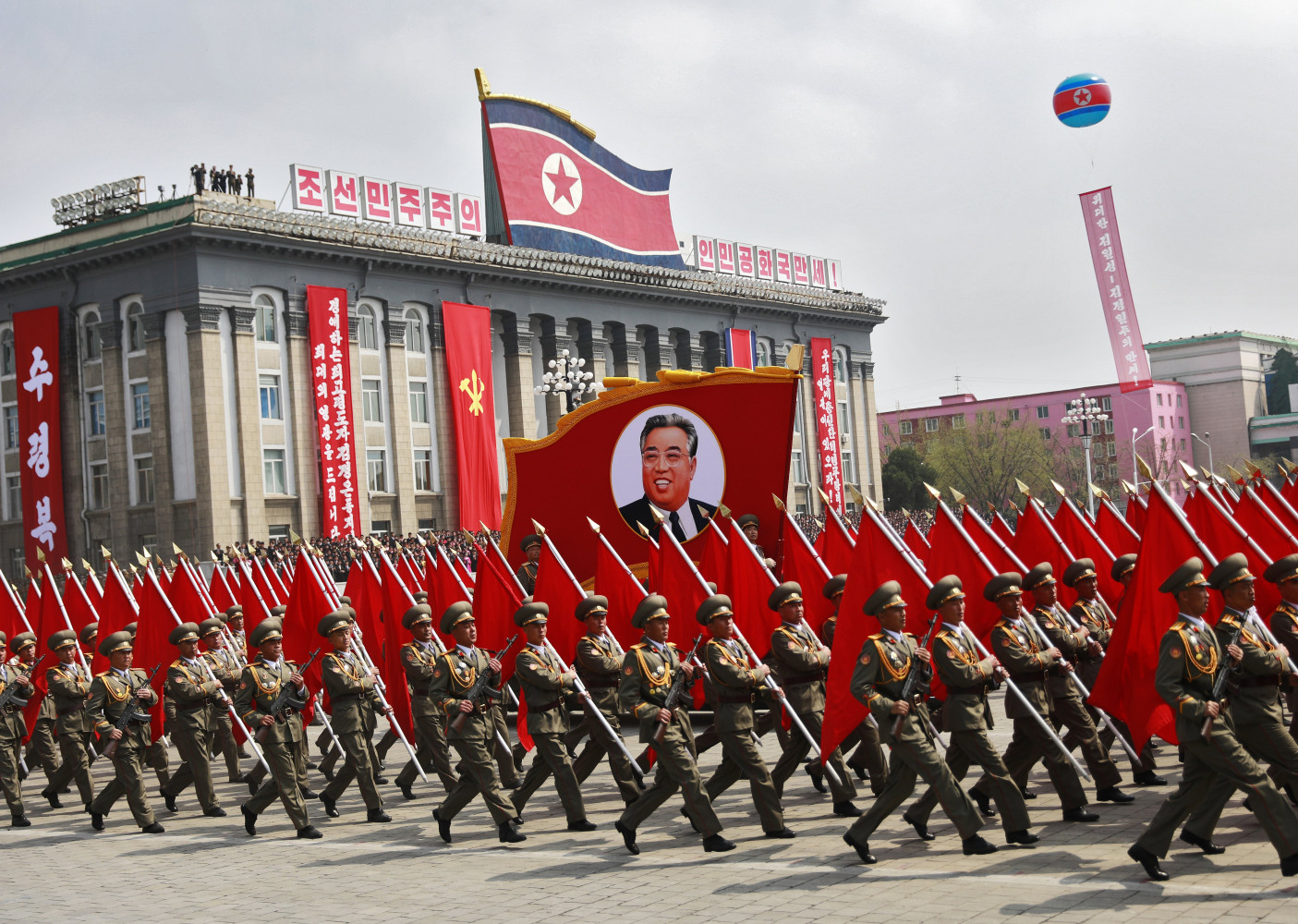
A man walks the the street decorated with flags as North Korea prepares to mark Saturday's 105th anniversary of the birth of Kim Il-sung, North Korea's founding father and grandfather of the current ruler, in central Pyongyang, North Korea April 12, 2017.    REUTERS/Damir Sagolj
North Korea's state media published a rare criticism of China on Wednesday, saying Chinese state media commentaries calling for tougher sanctions over Pyongyang's nuclear program were undermining relations with Beijing and worsening tensions.

A commentary carried by the official Korean Central News Agency (KCNA) referred to recent commentaries in China's People's Daily and Global Times newspapers, which it said were "widely known as media speaking for the official stand of the Chinese party and government."

"A string of absurd and reckless remarks are now heard from China every day only to render the present bad situation tenser," it said.

"China had better ponder over the grave consequences to be entailed by its reckless act of chopping down the pillar of the DPRK-China relations," the commentary said, referring to North Korea by the acronym for its official name, the Democratic People's Republic of Korea.

China is North Korea's neighbor and only major ally and the United States has pressed it to use its influence to rein in North Korea's nuclear and missile programs. Diplomats say Washington and Beijing are negotiating a possible stronger U.N. Security Council response - such as new sanctions - to North Korea's repeated ballistic missile launches.

The KCNA commentary charged that the Chinese articles had attempted to shift the blame to Pyongyang for "deteriorated relations" between China and North Korea and U.S. deployment of strategic assets to the region.

It also accused China of "hyping up" damage caused by North Korean nuclear tests to China's three northeastern provinces.

Chinese state media calls for North Korea to dismantle its nuclear program were "a wanton violation of the independent and legitimate rights, dignity and supreme interests" of North Korea and constituted "an undisguised threat to an honest-minded neighboring country which has a long history and tradition of friendship," it said.

The KCNA commentary said calls by "some ignorant politicians and media persons" in China for stricter sanctions on North Korea and not ruling out military intervention if it refused to abandon its nuclear program, were "based on big-power chauvinism."

It said North Korea's nuclear program was needed for the "existence and development" of the country and "can never be changed nor shaken."

"The DPRK will never beg for the maintenance of friendship with China," the commentary said.

Earlier on Wednesday, China called on all parties in the Korean standoff to stay calm and "stop irritating each other" a day after North Korea said the United States was pushing the region to the brink of nuclear war.

Source: Reuters

sexta-feira, 28 de abril de 2017

China warns situation with North Korea at 'critical point'


China warned on Friday that the situation with North Korea over its nuclear and ballistic missile programs is at a "critical point" and said dialogue and negotiations are the only "practical" way to end tensions.

Speaking at the United Nations before a Security Council meeting on North Korea - to be chaired by U.S. Secretary of State Rex Tillerson - China's Foreign Minister Wang Yi pledged that Beijing would fully implement all U.N. sanctions on North Korea.

"Due to the recent efforts by the DPRK (North Korea) to accelerate missile and nuclear development, China agrees to the international community to step up efforts of non-proliferation," Wang told reporters.

"A peaceful settlement of the nuclear issue on the Korean Peninsula through dialogue and negotiations represents the only right choice that is practical and viable," he said.

Tillerson, in his first visit to the United Nations as secretary of state, will press the 15-member Security Council to further isolate North Korea by swiftly imposing stronger sanctions in the event of further provocations by Pyongyang, including a long-range missile launch or sixth nuclear test.

The ministerial meeting comes after U.S. President Donald Trump told Reuters on Thursday that a "major, major conflict" with North Korea was possible over its nuclear and ballistic missile programs.

The United States, which is president of the Security Council for April, urged members - in a note outlining Friday's meeting - to "show their resolve to respond to further provocations with significant new measures."

Diplomats say further provocations are considered a nuclear test or long-range missile launch.

The Trump administration is focusing its North Korea strategy on tougher economic sanctions, possibly including an oil embargo, a global ban on its airline, intercepting cargo ships and punishing Chinese banks doing business with Pyongyang, U.S. officials told Reuters earlier this month.

The United States has been urging China to use its status as North Korea's only major ally to help rein in Pyongyang.

Washington is also stepping up pressure that began under the Obama administration against Cambodia, Laos and Malaysia, which have diplomatic and financial links to Pyongyang, to downgrade or cut diplomatic ties with North Korea.

TALKS SEQUENCE

U.N. Secretary-General Antonio Guterres is due to brief the Security Council at Friday's meeting, which will include foreign ministers from China, Britain and Japan. Tillerson met with his South Korean and Japanese counterparts before the council meeting and will meet Wang afterwards.

China has long promoted dialogue to resolve the "Korean nuclear issue," and the United States says it is open to talks, but the two countries disagree over the sequence.

"The U.S. require (North Korea) to take some actual action to curtail their nuclear program, which could then be followed by talks, and the Chinese position is talks first, action later," said a senior U.N. diplomat, speaking on condition of anonymity.

Since 2006, North Korea has been subject to U.N. sanctions aimed at impeding the development of its nuclear and missile programs. The council has strengthened sanctions following each of North Korea's five nuclear tests.

Traditionally the United States and China have negotiated new sanctions before involving remaining council members. It took the council three months to act after the last nuclear test, in September, and diplomats said Washington appears to be laying the groundwork with China for faster negotiations next time.

Source: Reuters

quarta-feira, 19 de abril de 2017

As Trump warned North Korea, his 'armada' was headed toward Australia


When U.S. President Donald Trump boasted early last week that he had sent an "armada" as a warning to North Korea, the aircraft carrier strike group he spoke of was still far from the Korean peninsula, and headed in the opposite direction.

It was even farther away over the weekend, moving through the Sunda Strait and then into the Indian Ocean, as North Korea displayed what appeared to be new missiles at a parade and staged a failed missile test.

The U.S. military's Pacific Command explained on Tuesday that the strike group first had to complete a shorter-than-initially planned period of training with Australia. But it was now "proceeding to the Western Pacific as ordered," it said.

The perceived communications mix-up has raised eyebrows among Korea experts, who wonder whether it erodes the Trump administration's credibility at a time when U.S. rhetoric about the North's advancing nuclear and missile capabilities are raising concerns about a potential conflict.

"If you threaten them and your threat is not credible, it's only going to undermine whatever your policy toward them is. And that could be a logical conclusion from what's just happened," said North Korea expert Joel Wit at the 38 North monitoring group, run by Johns Hopkins University's School of Advanced International Studies.

The U.S. military initially said in a statement dated April 10 that Admiral Harry Harris, the commander of Pacific Command, directed the Carl Vinson strike group "to sail north and report on station in the Western Pacific."

Reuters and other news outlets reported on April 11 that the movement would take more than a week. The Navy, for security reasons, says it does not report future operational locations of its ships.

Defense Secretary Jim Mattis initially appeared to play down the deployment on April 11, saying the Vinson was "just on her way up there because that's where we thought it was most prudent to have her at this time."

"There's not a specific demand signal or specific reason why we're sending her up there," he said.

But even Mattis initially misspoke about the strike group's itinerary, telling a news conference that the Vinson had pulled out of an exercise with Australia.

The Pentagon has since corrected the record, saying the ship's planned port visit to Fremantle, Australia, was canceled - not the exercise with Australia's navy.

Source: Reuters

segunda-feira, 17 de abril de 2017

Pence warns North Korea of U.S. resolve shown in Syria, Afghan strikes


U.S. Vice President Mike Pence put North Korea on notice on Monday, warning that recent U.S. strikes in Syria and Afghanistan showed that the resolve of President Donald Trump should not be tested.

Pence and South Korean acting president Hwang Kyo-ahn, speaking a day after a failed missile test by the North and two days after a huge display of missiles in Pyongyang, also said they would strengthen anti-North Korea defences by moving ahead with the early deployment of the THAAD missile-defence system.

Pence is on the first stop of a four-nation Asia tour intended to show America's allies, and remind its adversaries, that the Trump administration was not turning its back on the increasingly volatile region.

"Just in the past two weeks, the world witnessed the strength and resolve of our new president in actions taken in Syria and Afghanistan," Pence said in a joint appearance with Hwang.

"North Korea would do well not to test his resolve or the strength of the armed forces of the United States in this region," Pence said.

The U.S. Navy this month struck a Syrian airfield with 59 Tomahawk missiles after a chemical weapons attack. On Thursday, the U.S. military said it had dropped "the mother of all bombs", the largest non-nuclear device it has ever unleashed in combat, on a network of caves and tunnels used by Islamic State in Afghanistan.

North Korea's KCNA news agency on Monday carried a letter from leader Kim Jong Un to Syrian President Bashar al-Assad marking the 70th anniversary of Syria’s independence.

"I express again a strong support and alliance to the Syrian government and its people for its work of justice, condemning the United States’ recent violent invasive act against your country," Kim said.

On a visit to the border between North and South Korea earlier in the day, Pence, whose father served in the 1950-53 Korean War, said the United States would stand by its "iron-clad alliance" with South Korea.

"All options are on the table to achieve the objectives and ensure the stability of the people of this country," he told reporters as tinny propaganda music floated across from the North Korean side of the so-called demilitarized zone (DMZ).

"There was a period of strategic patience but the era of strategic patience is over."

ECONOMIC TALKS

Pence is expected to discuss rising tension on the Korean peninsula with Japanese Prime Minister Shinzo Abe on Tuesday when he travels to Tokyo to kick off economic talks with Finance Minister Taro Aso.

Pence will meet business leaders in Seoul before departing - a "listening session" he will reprise at other stops on his tour in Tokyo, Jakarta and Sydney.

His economic discussions will be closely watched to see how hard a line Washington is prepared to take on trade. Trump campaigned for office on an "America First" platform, and has vowed to narrow big trade deficits with nations like China, Germany and Japan.

But Trump has also shown he is willing to link trade to other issues, saying he would cut a better trade deal with China if it exerts influence on North Korea to curb its nuclear ambitions.

Trump acknowledged on Sunday that the softer line he had taken on China's management of its currency was linked to its help on North Korea.

The United States, its allies and China are working on a range of responses to North Korea's latest failed ballistic missile test, Trump's national security adviser said on Sunday, citing what he called an international consensus to act.

China has spoken out against the North's weapons tests and has supported U.N. sanctions. It has repeatedly called for talks while appearing increasingly frustrated with the North.

But Pence and Hwang said they were troubled by retaliatory economic moves by China against the deployment in South Korea of a U.S. anti-missile system known as the Terminal High Altitude Area Defense (THAAD).

South Korea, which accuses China or discriminating against some South Korean companies working in China, and the United States say the sole purpose of THAAD is to guard against North Korean missiles.

China says its powerful radar can penetrate its territory and undermine its security and spoke out against it again on Monday.

Source: Reuters

segunda-feira, 6 de março de 2017

North Korea fires four ballistic missiles into sea, angering Japan and South


North Korea fired four ballistic missiles into the sea off Japan's northwest on Monday, angering South Korea and Japan, days after it promised retaliation over U.S.-South Korea military drills it sees as a preparation for war.

South Korea's military said the missiles were unlikely to have been intercontinental ballistic missiles (ICBM), which can reach the United States. The missiles flew on average 1,000 km (620 miles) and reached a height of 260 km (160 miles).

Some of the missiles landed in waters as close as 300 km (190 miles) from Japan's northwest coast, Japan's Defence Minister Tomomi Inada said in Tokyo.

Japanese Prime Minister Shinzo Abe said "strong protests" had been lodged with nuclear-armed North Korea, which has carried out a series of nuclear and missile tests in defiance of U.N. resolutions.

"The launches are clearly in violation of Security Council resolutions. It is an extremely dangerous action," Abe told parliament.

South Korea's acting President Hwang Kyo-ahn condemned the launches as a direct challenge to the international community and said Seoul would swiftly deploy a U.S. anti-missile defense system despite angry objections from China.

The missiles were launched from the Tongchang-ri region near the reclusive North's border with China, South Korean military spokesman Roh Jae-cheon told a briefing. It was too early to say what the relatively low altitude indicated about the types of missiles, he said.

Joshua Pollack, editor of the U.S.-based Non-Proliferation Review, said it did not appear the North had launched an ICBM.

"It sounds like a field exercise involving deployed missiles, probably ones we've seen before," Pollack said.

U.S. officials, speaking on condition of anonymity, also told Reuters there were no indications so far that North Korea had tested an ICBM.

The U.S. military said it detected and tracked what it assessed was a North Korean missile launch, but it did not pose a threat to North America.

Chinese Foreign Ministry spokesman Geng Shuang said at a daily news briefing that China, which is holding its annual meeting of the National People's Congress, had noted North Korea's latest action.

"All sides should exercise restraint and not do anything to irritate each other to worsen regional tensions," Geng said, referring to both the missile launch and U.S.-South Korean military exercises.

JOINT DRILLS

North Korea had threatened to take "strong retaliatory measures" after South Korea and the United States began annual joint military drills on Wednesday that test their defensive readiness against possible aggression from the North.

North Korea criticizes the annual drills and has previously conducted missile launches to coincide with the exercises.

Last year, North Korea fired a long-range rocket from Tongchang-ri that put an object into orbit. That launch was condemned by the United Nations for violating resolutions that ban the use of ballistic missile technology.

North Korea test-fired a new type of missile into the sea early last month, and has said it would continue to launch new strategic weapons.

Last month's test was the first since the election of U.S. President Donald Trump, who has vowed to rein in North Korea and its young leader, Kim Jong Un.

Trump's national security deputies have reviewed in recent meetings a range of options to counter the North's missile threat, the New York Times reported. Options include direct missile strikes on the North's launch sites and the possibility of reintroducing nuclear weapons to the South, the Times said.

Those options would soon be presented to Trump and his top national security aides, the report said, quoting U.S. administration officials.

The United States withdrew nuclear weapons from South Korea in 1991 before the rival Koreas signed a declaration on denuclearization of the Korean peninsula. North Korea has since walked away from the agreement, citing the threat of invasion by the United States.

"The claim that we should redeploy nuclear weapons here, 20 years after they were withdrawn, is total nonsense," said Woo Sang-ho, floor leader of South Korea’s main opposition Democratic Party.

"I am formally asking the United States not to bring this issue up for consideration," Woo said in a party meeting.

North Korea conducted its fifth and most powerful nuclear test last September, following what the United States said was an "unprecedented" level of activity in its banned nuclear and missile programs.

State media said after that test Pyongyang had used a nuclear warhead small enough to mount on a ballistic missile.

The United States has about 28,500 troops and equipment stationed in the South, and plans to roll out the Terminal High Altitude Area Defense (THAAD) anti-missile defense system by the end of the year.

Japan also plans to reinforce its ballistic missile defenses and is considering buying either THAAD or building a ground-based version of the Aegis system that is currently deployed on ships in the Sea of Japan.

Source: Reuters

segunda-feira, 20 de fevereiro de 2017

Malaysia summons North Korean envoy over Kim Jong-nam probe comments

North Korea's ambassador to Malaysia, Kang Chol (R) speaks to media outside the North Korean embassy during a press conference in Kuala Lumpur, Malaysia, 20 February 2017.  EPA/FAZRY ISMAIL
Malaysian authorities summoned the North Korean ambassador in Kuala Lumpur Monday and asked him to explain his criticism of the probe into the recent death of Kim Jong-nam, the North Korean leader's half brother.

In a statement, the Malaysian foreign ministry said its deputy secretary general for bilateral affairs, Nushirwan Zainal Abidin, met North Korea's Kang Chol and added the Malaysian envoy to Pyongyang was also recalled for consultations.

Source: EFE

China steel mills caught on the hop by North Korea coal ban


China's steel mills and traders were scrambling to find alternative supplies of coking coal for steel making on Monday after Beijing slapped a surprise ban on coal imports from its isolated northern neighbor.

Chinese prices of steel, coking coal and coke all rallied, as traders and analysts said mills will likely be forced to buy more expensive domestic material or seek alternatives further afield from Russia or Australia, driving up costs.

While North Korea accounts for only a small portion of China's total coal imports, it is the main foreign supplier of high-quality thermal coal, called anthracite, which is used to make coke, a key ingredient in steelmaking.

"This news really took us by surprise. We are looking at a couple of alternative plans," said a steel mill purchasing manager, based in the northern province of Liaoning.

These included buying anthracite from Shanxi province or buying more coke from local providers, but both were more costly, said the manager, whose firm uses about 10,000 tonnes of North Korean anthracite each month.

Business with North Korea had become increasingly difficult under years of sanctions and the once-bustling trade handling coal from the north had shrunk to just a few private merchants.

Still few mills or traders anticipated the complete suspension of imports, which came a week after Pyongyang tested an intermediate-range ballistic missile, its first direct challenge to the international community since U.S. President Donald Trump took office on Jan. 20.

China bought 22.48 million tonnes of anthracite from North Korea in 2016, 85 percent of its total imports.

PRICES RALLY

Steel mills often blend anthracite with coking coal to make coke, a fuel used in blast furnaces, rather than using only more expensive coking coal.

China's most-active futures contract for rebar, a steel product used in construction, rose 2.6 percent by 0640 GMT on Monday, while coke and coking coal added 2.6 percent and 2.4 percent respectively.

Shares in Chinese anthracite producer Yangquan Coal Industry rose 2.8 percent.

"Rebar jumped on anticipation that the ban on North Korean anthracite could lead to higher costs for steel mills that will struggle to find cheaper alternatives in the domestic market," said Zhang Min, a coal analyst based in Zibo, Shandong with Sublime Information Group.

A coke producer said he expected to ban to lead to a rebound in coke prices, which had fallen since late December due to good supply and reduced demand for the Lunar New Year.

"I am not planning to take any new orders from new clients right now, because we believe coke powder prices will rebound sharply this week on the news," said the manager of a domestic coke plant, based in Shandong province.

Some mills could seek other imports, but producers such as Australia, Russia and Vietnam didn't produce enough to pick up the slack and shipping it would cost significantly more than from North Korea, traders said.

Source: Reuters

sexta-feira, 17 de fevereiro de 2017

Seoul to use border loudspeakers to announce Kim Jong-nam's death

(FILE) A file picture released on 11 August 2015 by the Defense Ministry shows South Korean soldiers installing loudspeakers at a unidentified site on the western front-line bordering North Korea. EPA/YONHAP/DEFENSCE MINISTRY
South Korea will use loudspeakers installed along its border with the North to announce the news of the alleged assassination of the older half-brother of the leader of the North Korean regime, the South Korean army announced Thursday.
The measure is aimed at informing the North Korean people and soldiers of the alleged assassination, spokesperson of South Korea's joint chiefs of staff, Noh Jae-chon, said at a press conference, according to media reports.
Source: EFE

segunda-feira, 13 de fevereiro de 2017

New nuclear-capable missile test a success, North Korea says


North Korea said on Monday it had successfully test-fired a new type of medium- to long-range ballistic missile the previous day, claiming advances in a weapons programme it is pursuing in violation of U.N. resolutions.

North Korea fired the missile on a high arc into the sea early on Sunday, the first probe of U.S. President Donald Trump's vow to get tough on an isolated regime that tested nuclear devices and ballistic missiles last year at an unprecedented rate.

The North's state-run KCNA news agency said leader Kim Jong Un supervised the test of the Pukguksong-2, a new type of strategic weapon capable of carrying a nuclear warhead.

The United States, Japan and South Korea requested urgent U.N. Security Council consultations on the test, with a meeting expected later on Monday, an official in the U.S. mission to the United Nations said.

Japan said further sanctions against North Korea could be discussed at the United Nations, and called on China to take a "constructive" role in responding.

China is North Korea's main ally and trading partner but is irritated by its repeated aggressive actions, although it rejects suggestions from the United States and others that it could be doing more to rein in its neighbour.

"We have asked China via various levels to take constructive actions as a permanent member of the U.N. Security Council and we will continue to work on it," said Japan's Chief Cabinet Secretary Yoshihide Suga.

China said it opposed North Korean missile tests that run contrary to U.N. resolutions.

"All sides should exercise restraint and jointly maintain regional peace and security," Chinese Foreign Ministry spokesman Geng Shuang told a regular briefing, adding that China would participate in talks at the United Nations on the launch with a "responsible and constructive attitude".

Russia's foreign ministry expressed concern over the launch, RIA news agency quoted the ministry as saying.

HIGH ANGLE

North Korea has conducted five nuclear tests, including two last year, although its claims to be able to miniaturise a nuclear weapon to be mounted on a missile have never been verified independently.

Leader Kim said in his New Year speech the North was close to test-launching an intercontinental ballistic missile (ICBM) and state media have said such a launch could come at any time.

A fully developed ICBM could threaten the continental United States, which is about 9,000 km (5,500 miles) from North Korea.

The KCNA news agency said the missile fired on Sunday was launched at a high angle in consideration of the safety of neighbouring countries. A South Korean military source said on Sunday it reached an altitude of 550 km (340 miles).

It flew about 500 km towards Japan, landing off the east coast of the Korean peninsula.

The missile was propelled by a solid fuel engine and was an upgraded, extended-range version of its submarine-launched ballistic missile that was tested successfully last August, according to KCNA.

The missile's name - Pukguksong-2 - translates as north star or Polaris, the same name of the first U.S. submarine-launched missile.

South Korea's military said the missile had been launched using a "cold-eject" system, whereby it is initially lifted by compressed gas before flying under the power of its rocket, a system used for submarine-launched missiles.

North Korea's pursuit of large solid-fuelled missiles was "a very concerning development", said Jonathan McDowell of the Harvard Smithsonian Center for Astrophysics.

"Large solid-fuel motors are difficult to make work correctly so this is indeed a significant advance by North Korea," McDowell said.

'INTOLERABLE'

In addition to launching more quickly, solid-fuel engines also boost the power and range of ballistic rockets.

"Solid-motor engines mean that the fuel is pre-stored and the missile can be launched quickly. For example, rolled out of a cave, tunnel, or bridge," said Melissa Hanham, a senior research associate at the U.S.-based Middlebury Institute of International Studies at Monterey, California.

"They are also more difficult to track by satellite because they have fewer support vehicles in their entourage."

The North's Rodong Sinmun newspaper showed pictures of a missile fired from a mobile launch vehicle, with a flame appearing only after it had risen clear of the vehicle.

Before Sunday, the North's two most recent missile tests were in October. Both were of intermediate-range Musudan missiles and both failed, according to U.S. and South Korean officials.

A U.S. official said at the weekend the Trump administration had been expecting a North Korean "provocation" soon after taking office.

The latest test came a day after Trump held a summit meeting with Japanese Prime Minister Shinzo Abe, and also followed a phone call last week between trump and Chinese President Xi Jinping.

Abe described the test as "absolutely intolerable".

In brief comments made while standing beside Abe in Florida, Trump said: "I just want everybody to understand, and fully know, that the United States of America is behind Japan, our great ally, 100 percent."

Trump and his aides are likely to weigh a series of responses, including new U.S. sanctions to tighten financial controls, an increase in naval and air assets in and around the Korean peninsula, and accelerated installation of new missile defence systems in South Korea, the administration official said.

However, the official said that, given that the missile was believed not to have been an ICBM, and the North had not carried out a new nuclear explosion, any response would seek to avoid increasing tension.

Source: Reuters

sexta-feira, 7 de outubro de 2016

Satellite images show activity at North Korea nuclear test site


An increase in activity at North Korea's nuclear test site could signal preparations for a new test or a collection of data from its last one, a U.S.-based monitoring group said on Friday, citing satellite images.

The 38 North group, run by Johns Hopkins University's School of Advanced International Studies, said there was activity at all three tunnel complexes at the Punggye-ri nuclear test site involving a large vehicle and personnel.

"One possible reason for this activity is to collect data on the Sept. 9 test although other purposes cannot be ruled out, such as sealing the portal or other preparations related to a new test," the group said, referring to the last nuclear test.

The North is believed to be ready for another nuclear test at any time and there has been speculation it could mark the Oct. 10 anniversary of the founding of its Workers' Party with another underground detonation.

North Korea conducted its first nuclear test in 2006 and has since then defied U.N. sanctions and rejected international talks to press ahead with the development of the weapons and missiles to carry them, which it says it needs for its defense.

In January, it conducted its fourth nuclear test and last month its fifth and biggest, on the anniversary of the nation's founding.

The United States and South Korea are pushing for tighter sanctions against North Korea by closing loopholes left in a U.N. Security Council resolution in March.

South Korea's Unification Ministry spokesman Jeong Joon-hee told a briefing there were no particular indication of a plan for a nuclear test timed to coincide with the Oct. 10 anniversary.

South Korea's Yonhap news agency cited an unidentified government official that there was activity at the North's rocket launch station near the west coast that could be preparations for a long-range missile launch.

Last month, the North said it had successfully conducted a ground test of a new rocket engine that would be used to launch satellites. South Korea said the engine could be used for a long-range missile.

North Korea last month fired three missiles that flew about 1,000 km (600 miles). In August, it tested a submarine-launched ballistic missile that international experts said showed considerable progress.

Japan said the possibility of further "provocative action" by North Korea could not be ruled out.

"The government is taking all possible measures in gathering information, exercising vigilance and taking surveillance activities to be able to respond to any situations," Japan's Chief Cabinet Secretary Yoshihide Suga told a news conference.

Source: Reuters

quarta-feira, 14 de setembro de 2016

Top diplomats from U.S., Japan, South Korea to meet on North Korea


U.S. Secretary of State John Kerry will meet with his Japanese and South Korean counterparts in New York on Sunday to discuss responses to North Korea's latest nuclear test, South Korea's foreign ministry said on Wednesday.

The three countries are pushing for tough new U.N. Security Council sanctions on North Korea after the isolated country on Friday conducted its fifth and largest nuclear test.

The blast was in defiance of U.N. sanctions that were tightened in March.

China, the North's chief ally, backed the March resolution but is more resistant to harsh new sanctions this time after the United States and South Korea decided to deploy a sophisticated anti-missile system in the South, which China adamantly opposes.

South Korea said Foreign Minister Yun Byung-se and his counterparts Kerry and Japanese Foreign Minister Fumio Kishida will meet during the annual U.N. General Assembly to discuss putting further pressure on North Korea.

The United States wants China to do more, with U.S. Defence Secretary Ash Carter last week singling out the role he said China should play in curbing its neighbor.

TESTING TIMES

North Korea has been testing nuclear weapons and ballistic missiles at an unprecedented rate this year under young leader Kim Jong Un.

On Tuesday, Chinese Foreign Minister Wang Yi spoke with South Korea's Yun by phone, expressing Beijing's opposition to the North's latest nuclear test but also reiterating opposition to the planned deployment of the Terminal High Altitude Area Defense (THADD) anti-missile system in the South, China's foreign ministry said.

China is North Korea's most important diplomatic and trade partner and refuses to cut the country off completely, fearing it could collapse.

Beijing's official People's Daily newspaper on Wednesday called the United States a troublemaker and said it has no right to lecture China about taking responsibility for reining in North Korea as tensions on the peninsula are a direct result of U.S. actions.

In a commentary, the ruling Communist Party's official paper said the United States was pretending it had nothing to do with the North Korea issue and was putting the blame on others.

"People have reason to doubt whether Washington is willing to make the effort to push the North Korea issue in the direction of a resolution," the paper said.

China and Russia have pushed for a resumption of six party talks on denuclearization in North Korea. The talks, which also involve Japan, South Korea and the United States, have been on hold since 2008.

Washington has said it is willing to negotiate with the North if it the country commits to denuclearization, which Pyongyang has refused to do.

Japanese Prime Minister Shinzo Abe will seek Cuba's help in responding to North Korea's nuclear and missile programs during a rare visit to Havana next week, a spokesman said.

Source: Reuters

segunda-feira, 12 de setembro de 2016

North Korea ready for another nuclear test any time: South Korea


North Korea is ready to conduct an additional nuclear test at any time, South Korea's Defense Ministry said on Monday, three days after the reclusive North's fifth test drew widespread condemnation.

Pyongyang set off its most powerful nuclear blast to date on Friday, saying it had mastered the ability to mount a warhead on a ballistic missile and ratcheting up a threat that its rivals and the United Nations have been powerless to contain.

"Assessment by South Korean and U.S. intelligence is that the North is always ready for an additional nuclear test in the Punggye-ri area," the site of the North's five nuclear explosions, South Korean Defense Ministry spokesman Moon Sang-gyun told a news briefing.

"North Korea has a tunnel where it can conduct an additional nuclear test," Moon said.

South Korea is pushing for more sanctions against Pyongyang to close what it says were loopholes left in the last United Nations Security Council resolution adopted in March.

Both China and Russia backed sanctions imposed in March following the North's January nuclear test, but their apparent ambivalence about fresh sanctions cast doubt on the Security Council's ability to quickly form a consensus.

"We expect that China, as one of the Security Council member states, should take this issue seriously and play a very constructive role to come up with a very effective and strong sanctions resolution," a South Korean foreign ministry official said.

NEW SANCTIONS?

The Security Council denounced the latest test on Friday and said it would begin work immediately on a resolution. The United States, Britain and France - three of the five veto-wielding permanent members - pushed for the 15-member body to impose new sanctions.

However, China's foreign ministry spokeswoman Hua Chunying said sanctions alone could not solve the North Korean nuclear issue. The crux of the issue lay with the United States, not China, she added.

On Saturday, Russian Foreign Minister Sergei Lavrov said a "creative" response was needed.

Speaking to Lavrov on Monday, Chinese Foreign Minister Wang Yi said China "strongly urged North Korea and other relevant parties to remain calm and exercise restraint, and not take any new steps to intensify tensions", China's Foreign Ministry said.

Russia's Foreign Ministry said Lavrov and Wang condemned North Korea's latest nuclear test in a phone conversation on Monday. Russia and China are the remaining veto powers on the Security Council.

As tensions rose on the Korean peninsula in the week of last week's test, South Korea's President Park Geun-hye said that North Korea's nuclear weapons and missiles posed an "imminent threat.

"As North Korea has publicly said nuclear warheads have been standardized and customized to mount on ballistic missiles, we should keep in mind that North Korea's nuclear missiles are a realistic, imminent threat targeting us, not a simple threat for negotiations," Park said in a meeting with major political party leaders.

Pyongyang's assertions that it is able to miniaturize a nuclear warhead have never been independently verified.

BOMBER FLIGHT DELAYED

North Korean Foreign Minister Ri Yong Ho, formerly the country's chief nuclear negotiator, arrived in Beijing on Monday and was seen entering the country's embassy, Japan's Kyodo news agency reported.

Ri left Pyongyang on Monday to attend a meeting of the Non-Aligned Movement countries in Venezuela and later the U.N. General Assembly, the North's official KCNA news agency said.

A U.S. special envoy for the isolated state, Sung Kim, will travel to Seoul on Monday. Kim met Japanese officials on Sunday and said the United States may launch unilateral sanctions against North Korea, echoing comments by U.S. President Barack Obama on Friday in the wake of the test.

South Korea's Yonhap news agency reported that bad weather had delayed the flight of an advanced U.S. B-1B bomber to the Korean peninsula, a show of strength and solidarity with ally Seoul, scheduled for Monday.

The flight from the U.S. base in Guam would now take place on Tuesday, a U.S. Forces in Korea official told Reuters, declining to identify the type of aircraft involved.

A group of 31 South Korean conservative lawmakers said the country should have nuclear weapons, either by acquiring its own arms or asking the Americans to redeploy tactical nuclear weapons that were withdrawn from the South under a 1991 pact for the decentralization of the peninsula.

"We should discuss every plan including an independent nuclear armament program at the level of self-defense to safeguard peace," Won Yoo-chul, a senior lawmaker for the ruling Saenuri Party, said in a statement.

South Korea's defense ministry said there was no change in its policy barring nuclear weapons.

Source: Reuters